You started a newsletter to reach people, then opened your email dashboard and found a spreadsheet. Subscribers counted twice across audiences, an engagement score you cannot see the math behind, and a bill that climbs whether or not anyone opens your emails. For a creator, that is backwards. You want to know who your readers are and what they respond to, not manage a contact database built for a marketing department.
The best Mailchimp alternatives for creators in 2026 flip that around, treating each subscriber as a person you can track, tag, and grow a relationship with, rather than a line item. Many also fold in the monetization and first-party analytics that Mailchimp bolts on awkwardly. Here are seven worth a look, how they compare, and which fits which kind of creator.
The 7 Alternatives at a Glance
- Kit: tag-based tracking and creator monetization built in.
- beehiiv: newsletter growth analytics with a 0% paid take rate.
- MailerLite: simple and affordable with clean automations.
- Buttondown: privacy-first and minimal, light on tracking.
- Ghost: own your site, audience, and memberships.
- Flodesk: flat-rate pricing no matter your list size.
- EmailOctopus: budget option for a straightforward list.
How We Chose These
We focused on platforms built for creators rather than corporate marketing teams, and weighed how each one handles the subscriber as an individual. The priorities were first-party, per-subscriber tracking with tags and segments, transparent deliverability tools like domain authentication, and monetization that lets a newsletter earn without a heavy cut.
We also looked at the free tier, how painful a migration of tags and automations would be, and whether the analytics show real signals a creator can act on. The result is a spread from all-in creator suites to lean, privacy-minded senders, so you can match the tool to how you actually publish.
What Subscriber-First Tracking Actually Means
Subscriber-first tracking means the platform is organized around people, not lists. Instead of duplicating a reader across separate audiences and charging for each copy, one subscriber has a single profile you can tag by interest, see the sign-up source for, and follow through your automations.
It also leans on first-party data, the engagement you collect directly, rather than third-party pixels that browsers increasingly block. Paired with proper domain authentication, that gives you cleaner deliverability and analytics you can trust, which is exactly the part creators say gets murky on a list-based tool.
Quick Comparison
| Platform | Best for | Free tier | Tracking style |
|---|---|---|---|
| Kit | Creators selling products | Yes, for new creators | Tags and subscriber profiles |
| beehiiv | Growth-focused newsletters | Yes, up to 2,500 subs | Growth-source analytics |
| MailerLite | Simple, affordable sending | Yes | Segments and automations |
| Buttondown | Privacy-minded writers | Yes, small lists | Minimal by design |
| Ghost | Owning your whole platform | Trial only | Member analytics |
| Flodesk | Design-led, flat pricing | Trial only | Basic engagement |
| EmailOctopus | Budget list sending | Yes | Standard reports |
1. Kit
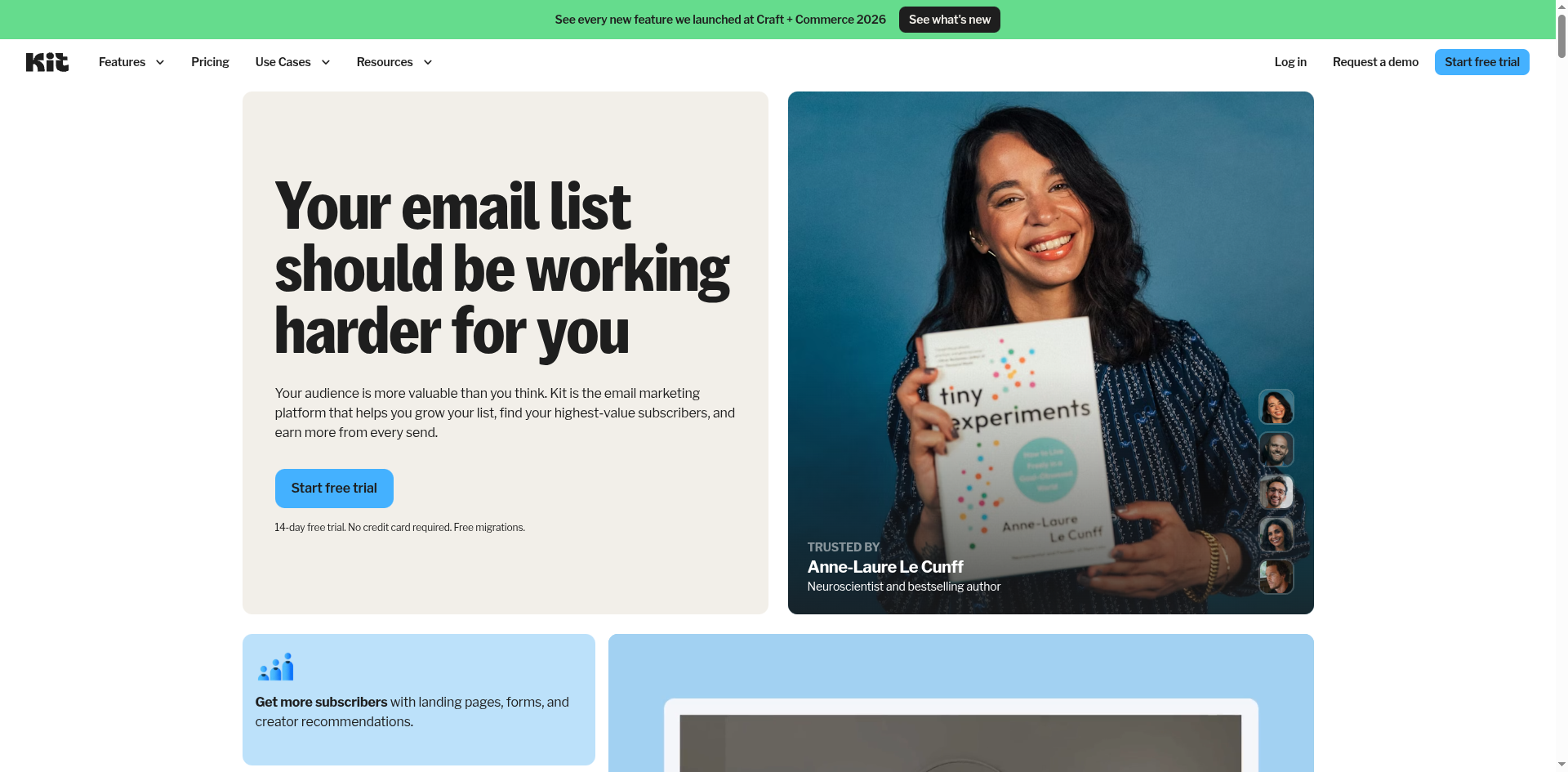
Kit, formerly ConvertKit, is the creator suite most people land on. It was built around subscribers rather than lists, so tagging by interest, seeing where someone signed up, and triggering automations from that all feel native, and it layers on selling digital products, tips, and creator recommendations.
That makes Kit a strong fit if you sell or plan to sell something to your audience. There is a free plan for newer creators, and paid tiers scale with your subscriber count. The trade is that it is more tool than a pure newsletter reader may need, but the subscriber-first tracking is exactly what Mailchimp makes you work for.
2. beehiiv
beehiiv is the newsletter-native option, built by people who ran a large newsletter and wanted better tools. Its analytics lean into growth: where subscribers come from, which posts convert, and how your audience is compounding, which is the data a creator chasing reach actually uses.
The money side stands out too, with a 0% take rate on paid subscriptions and a free tier up to 2,500 subscribers. If your goal is to grow and eventually monetize a newsletter brand, beehiiv is designed for that job, and its referral and recommendation features help the list build itself.
3. MailerLite
MailerLite is the easy, affordable middle ground. It keeps the interface clean and the learning curve short, while still offering segmentation, automations, and landing pages, which covers most of what a solo creator needs without the Mailchimp price climb.
Tracking here is segment and automation based rather than a full creator CRM, but it is transparent and quick to set up. For a creator who wants to send a good-looking newsletter, tag a few interests, and not overthink it, MailerLite is a sensible, low-cost home.
4. Buttondown
Buttondown takes the opposite approach and makes a virtue of doing less. It is a lightweight, privacy-minded newsletter tool that writes in Markdown, avoids heavy tracking pixels, and keeps the reader experience clean, which appeals to creators who find surveillance-style analytics uncomfortable.
You still get the essentials, subscriber management, basic stats, and paid subscriptions, without a dashboard full of metrics you will not use. If your priority is respecting your readers and keeping things simple, Buttondown is the quiet, ethical pick on this list.
5. Ghost
Ghost is for creators who want to own the whole thing. It is open-source publishing software that bundles your website, newsletter, and paid memberships in one place, so your audience and your content live on infrastructure you control rather than a rented platform.
Its member analytics track signups, engagement, and subscription revenue as first-party data by default. You can self-host it for the cost of a server or pay for managed hosting, and the payoff is independence: no per-subscriber pricing games and no platform sitting between you and your readers.
6. Flodesk
Flodesk sells on two things: design and predictable pricing. Its templates look modern out of the box, and it charges a flat rate no matter how large your list grows, which flips the usual model where every new subscriber raises your bill.
The analytics are more basic than a creator CRM, so this is less about deep subscriber tracking and more about sending beautiful emails at a fixed cost. For a visually driven creator with a growing list who hates surprise pricing, that flat rate is the whole appeal.
7. EmailOctopus
EmailOctopus is the value pick when you just need to send. It offers a free tier, low paid pricing, and the core features, lists, segments, automations, and reports, without the extras that push other tools’ prices up.
You give up the creator monetization and richer analytics of the suites, but for a straightforward newsletter on a tight budget, it does the job cleanly. It is a fair landing spot for anyone whose main complaint with Mailchimp is simply the cost.
Email platform features, free-tier limits, and pricing change often, and the right fit depends on your list size and goals. Confirm current plans, take rates, and deliverability features on each provider’s own site before you commit or migrate.
Frequently Asked Questions
What are the best Mailchimp alternatives for creators?
For creators, Kit and beehiiv lead because both track subscribers as individuals and build in monetization, Kit for selling products and beehiiv for growing a newsletter with a 0% paid take rate. MailerLite and EmailOctopus are cheaper and simpler, Buttondown is the privacy-minded pick, and Ghost is best if you want to own your whole platform.
Kit vs beehiiv: which should a creator choose?
Choose Kit if you sell digital products or courses and want tag-based automations around those sales. Choose beehiiv if your focus is growing a newsletter audience and monetizing it directly, since its growth analytics and 0% take rate on paid subscriptions are built for that. Both track subscribers first, so the deciding factor is whether you are selling products or scaling a publication.
Why do creators leave Mailchimp?
Common reasons include a list-based model that can count the same subscriber more than once, pricing that rises with contacts whether or not they engage, and reduced free-tier features over time. Creators also want first-party subscriber tracking and built-in monetization, which the alternatives here center rather than treat as add-ons.
Do these alternatives make it easy to migrate from Mailchimp?
Most support importing your subscribers, and several help rebuild tags, segments, and automations, though complex automations usually need to be recreated by hand. Export your audience, tags, and templates from Mailchimp first, then import and rebuild on the new tool. Plan a little time to reauthenticate your sending domain so deliverability stays intact.
What does subscriber-first tracking mean for deliverability?
It means your engagement data is collected directly and tied to real subscriber profiles, which, combined with proper domain authentication like SPF, DKIM, and DMARC, helps inbox placement. Tools built this way tend to make authentication setup clearer, so your emails are more likely to reach the inbox than get filtered as bulk mail.
The Bottom Line
If Mailchimp feels like it is managing a database instead of helping you reach readers, the fix is a tool built for creators. Kit and beehiiv are the standouts for subscriber-first tracking and monetization, while MailerLite, Buttondown, Ghost, Flodesk, and EmailOctopus each win on simplicity, privacy, ownership, design, or price. Match one to how you publish, export your tags and templates, and reauthenticate your domain, and the move is far less painful than staying. For more on running the business side of creating, browse YouGottaRead’s Business section, including our guides to payment platforms that avoid sudden holds and what banks accept for business address verification.