You are comparing two hotels at midnight, and the reviews are doing the deciding. Then you notice something off: a dozen five-star write-ups that all sound suspiciously alike, generic praise, no specifics, posted in a cluster. In 2026, that pattern often means a batch of AI-written reviews, and they can steer you straight into a bad stay. The fix is not to give up on reviews, but to book where the reviews come from people who actually slept in the bed.
Looking for Booking.com alternatives with verified reviews really means looking for platforms that tie reviews to completed stays, so synthetic spam has a harder time slipping through. To be fair, Booking.com itself uses a verified-stay model, where only guests who booked and stayed can review, which is a genuine strength. If you want to switch for other reasons, like different inventory or booking direct, these alternatives keep that review authenticity intact. Here are the best options and how to spot a fake.
The Short Answer
For review authenticity, favor platforms that only allow reviews from guests who completed a booking. Airbnb uses two-sided verified-stay reviews, Hostelworld and Expedia tie reviews to real bookings, and Trip.com does the same. Tripadvisor offers huge volume and fraud detection but is an open platform, so treat it as a cross-check rather than the sole source. Since October 2024, the FTC has banned fake and AI-generated reviews, but enforcement is imperfect, so verified-stay models remain your best filter.
Why Verified-Stay Reviews Matter
The single most effective defense against fake reviews is simple: only let people who actually stayed write one. A verified-stay review requires the reviewer to have paid for and completed a booking, which eliminates the cheapest kind of fake, the review from someone who was never a guest. That is why the platforms below are built around bookings rather than open submissions, and it is the same reason Booking.com’s own reviews carry weight.
This matters more in 2026 because AI has made convincing fake reviews cheap to mass-produce. Regulators have responded: the U.S. Federal Trade Commission’s rule banning fake and AI-generated reviews took effect in October 2024, and it prohibits buying fake reviews, generating them with AI from people who never used a service, and repurposing old reviews for a different property. You can read the rule on the FTC’s announcement page. Enforcement is real but imperfect, so a verified-stay model is still your best everyday filter.
How We Picked These Alternatives
We focused on what protects you from bad information. First and foremost, we favored platforms that tie reviews to completed bookings, so a reviewer must have actually stayed. We looked at the strength of each platform’s moderation and fraud detection, how transparent it is about its review process, and whether its inventory suits real trips, from hostels to full hotels to homes. We also weighed how easy each makes it to cross-check a property elsewhere, because the smartest approach is never to trust a single source, verified or not.
The Best Booking.com Alternatives
1. Airbnb: Best for two-sided verified reviews
Who it is for: travelers who want the strongest verification model. On Airbnb, both the guest and the host review each other after a completed stay, and reviews are tied to real bookings, so a review almost always reflects an actual visit. That two-sided structure adds accountability you rarely get elsewhere. It shines for homes and apartments rather than traditional hotels. Explore it on the Airbnb site.
The honest catch: it is not built for classic hotel stays, service fees can add up, and cancellation policies vary a lot by host, so read them before you book.
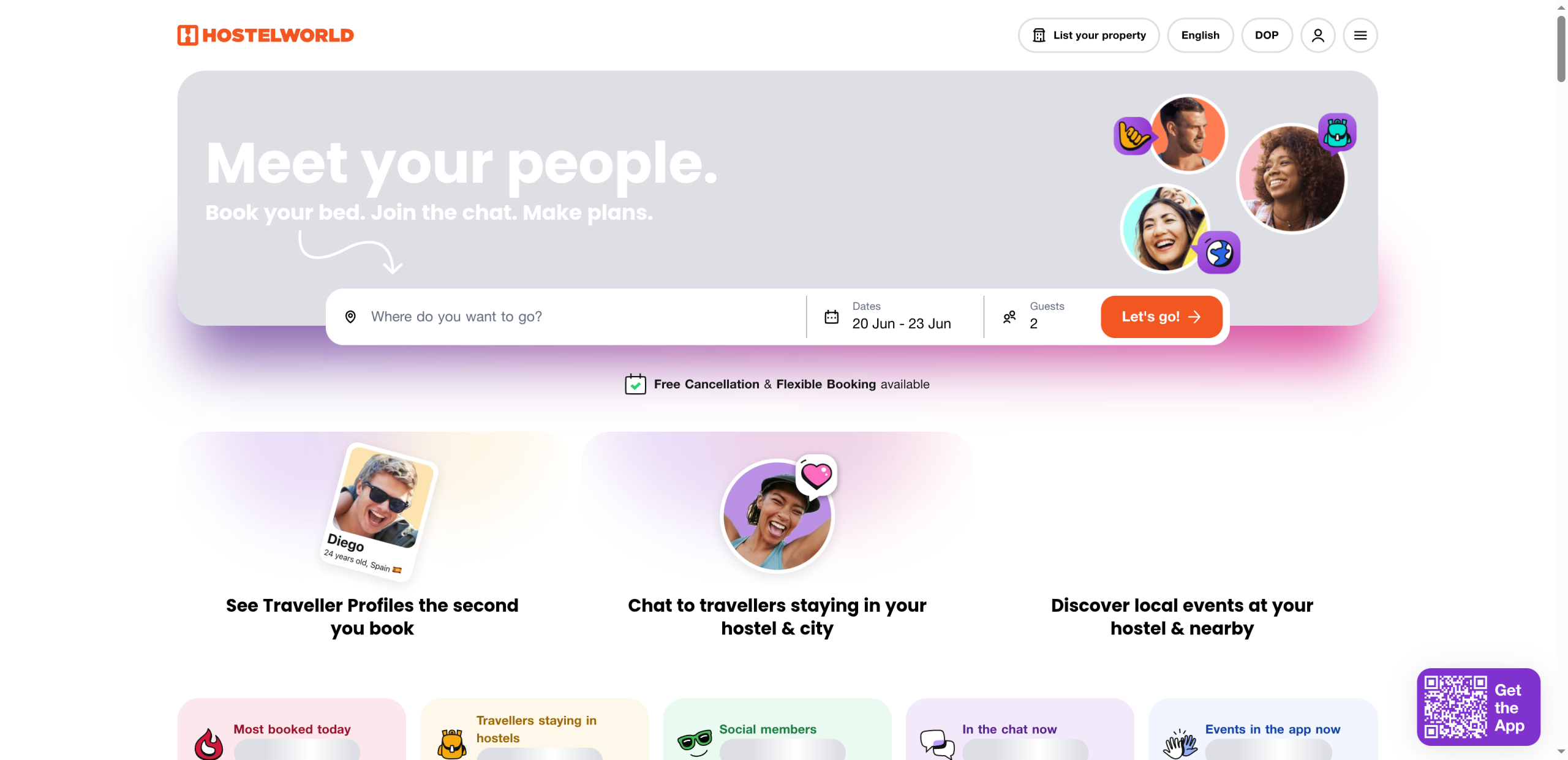
2. Hostelworld: Best for budget and social travel
Who it is for: solo travelers, backpackers, and anyone on a budget who still wants trustworthy reviews. Hostelworld ties its ratings to guests who actually booked, and it leans into a social, community feel that suits younger and solo travelers. Its niche focus means the reviews are written by people with similar priorities to yours. See it on the Hostelworld site.
The honest catch: the inventory centers on hostels and budget stays, so it is not the place for a full-service hotel or a family resort.
3. Expedia: Best for large verified hotel inventory
Who it is for: people who want a broad hotel selection with verified-stay reviews and the option to bundle flights and cars. Expedia, along with its sister site Hotels.com, ties reviews to completed bookings and offers a deep catalog plus loyalty perks. It is a strong all-rounder if you want hotels rather than homes.
The honest catch: as a large travel agency, its model is broadly similar to Booking.com, and customer support during disruptions can be slow, so keep your confirmations handy.
4. Trip.com: Best for global and Asia-heavy trips
Who it is for: travelers heading to Asia or wanting strong international coverage. Trip.com ties reviews to real bookings and offers a large global inventory with frequent app-based deals, which can make it a good-value alternative with credible reviews.
The honest catch: it is less familiar to some Western travelers, so take a moment to learn its cancellation terms and support channels before committing.
5. Tripadvisor: Best for cross-checking a property
Who it is for: researchers who want depth and volume. Tripadvisor has an enormous review base and invests in fraud detection, and it now lets you book directly, which makes it excellent for cross-referencing a place you found elsewhere.
The honest catch: it is an open review platform rather than a strictly verified-stay one, so reviews are not all tied to a completed booking. Use its volume as a cross-check alongside a verified-stay source, not as your only proof.
6. Booking direct: Best for skipping third-party reviews
Who it is for: travelers who would rather deal with the hotel itself. Booking straight through a hotel’s own site often brings price matching, loyalty benefits, and more flexible cancellation, and it sidesteps third-party review politics entirely. Just cross-check the property’s reviews on a verified-stay platform first so you know what you are getting.
The honest catch: you lose an aggregated review score at the point of booking, so you have to do that verification yourself before you commit.
Quick Comparison
| Platform | Review model | Best for |
|---|---|---|
| Airbnb | Two-sided verified-stay | Homes, strongest verification |
| Hostelworld | Verified-stay | Budget and social travel |
| Expedia | Verified-stay | Large hotel inventory |
| Trip.com | Verified-stay | Global and Asia trips |
| Tripadvisor | Open, with fraud detection | Cross-checking volume |
| Booking direct | None at booking | Skipping third parties |
How to Spot a Fake or AI Review
Whatever platform you use, a few habits help you catch synthetic reviews. Be wary of clusters of similar five-star reviews posted close together, and of generic praise with no specific details about the room, staff, or location. Reviews with original guest photos and concrete specifics, including balanced three-star write-ups, tend to be more trustworthy. Favor recent, verified-stay reviews, read a few of the critical ones to see how the property responds, and cross-check the same place on a second platform. If a property’s reviews feel uniformly glowing and oddly vague, treat that as a warning rather than a recommendation.
This is general guidance to help you compare booking platforms, and review systems, verification methods, and policies vary by platform and change over time. Confirm a platform’s current review and cancellation policies directly before booking, and treat any single review score, verified or not, as one input rather than proof. Cross-checking a property across more than one source remains the most reliable way to judge it.
Frequently Asked Questions
What are the best Booking.com alternatives with verified reviews?
Airbnb offers the strongest model with two-sided verified-stay reviews, while Hostelworld, Expedia, and Trip.com all tie reviews to completed bookings. Tripadvisor adds huge volume and fraud detection but is an open platform, so use it to cross-check rather than as your only source, and booking direct with a hotel lets you skip third-party reviews entirely if you verify the property elsewhere first. For authenticity, prioritize any platform that only lets guests who actually stayed leave a review.
Does Booking.com have fake reviews?
Booking.com uses a verified-stay model, meaning only guests who booked and stayed through the platform can leave a review, which filters out the cheapest fakes. No system is perfect, and synthetic reviews are an industry-wide challenge, but a verified-stay requirement is a real strength. The alternatives in this guide are worth considering for other reasons, like different inventory or booking direct, rather than because Booking.com lacks verification, since it shares that same protective feature.
Are AI-generated hotel reviews illegal now?
In the United States, the Federal Trade Commission’s rule banning fake and AI-generated reviews took effect in October 2024. It prohibits practices like buying fake reviews, generating reviews with AI from people who never used a service, and reusing old reviews for a different property. Enforcement has begun but is imperfect, and rules differ by country, so synthetic reviews still appear. That is why choosing verified-stay platforms and learning to spot fakes remains important for travelers.
How can I tell if a hotel review is fake or AI-written?
Watch for clusters of similar five-star reviews posted around the same time, generic praise with no specific details, and an absence of original guest photos. More trustworthy signs include concrete specifics, recent verified-stay reviews, balanced three-star write-ups, and thoughtful responses from the property to criticism. Cross-check the same hotel on a second platform, and if the reviews feel uniformly glowing yet strangely vague, treat that pattern as a red flag rather than reassurance.
Is it better to book direct or through a booking site?
Both have merits. Booking direct with a hotel often brings price matching, loyalty perks, and more flexible cancellation, and it avoids third-party review issues, but you lose an aggregated review score at the point of booking. Booking sites give you verified-stay reviews and easy comparison in one place. A good approach is to research and read verified reviews on a booking platform, then check whether the hotel’s own site offers a better rate or terms before you decide.
The Bottom Line
Reviews are only as useful as the people writing them, and in an age of cheap AI-generated spam, the safest bet is a platform that only lets real guests speak. Airbnb’s two-sided reviews, plus verified-stay models on Hostelworld, Expedia, and Trip.com, keep that authenticity, while Tripadvisor’s volume works best as a cross-check and booking direct lets you skip third-party reviews if you verify elsewhere. Remember that Booking.com already uses verified-stay reviews too, so switch for inventory or price, not out of fear its reviews are fake, and always cross-check a property before you commit. For more trip-planning help, see our guides to where hidden hotel resort fees hide and the rental house rules to screenshot before booking, or browse the YouGottaRead Travel section.