It is a specific kind of confusing. You plug a scan tool into a 2020 Ram, expect the usual flood of data, and instead get a stubborn nothing, or you can read a code but cannot clear it or run a single active test. Your first thought is a dead adapter or a fried port. Usually it is neither. A small module called a secure gateway is sitting between your tool and the car’s network, checking whether your scanner is allowed in.
These secure-gateway OBD2 troubleshooting steps are built to tell you what is actually happening and how to get real access, without guessing. Fiat Chrysler, now Stellantis, added the secure gateway to Chrysler, Dodge, Jeep, Ram, and Fiat models starting in 2018 to block remote hacking of the car’s network. The upside is that basic diagnostics still work; the catch is that anything that writes to the car needs authorization. Here is how to work through it.
The 10 Steps at a Glance
- Confirm it has a gateway: mostly 2018-plus Stellantis vehicles.
- Know what still works: reading codes and live data.
- Rule out a normal fault: ignition, seating, protocol, app.
- Spot a write block: reads fine, actions fail.
- Register with AutoAuth: the official authorized path.
- Use a supported scan tool: one that speaks to AutoAuth.
- Try the dealer route: full factory-level access.
- Check adapter and app support: not all combos qualify.
- Weigh a bypass harness: real trade-offs attached.
- Know when to stop: hand secured writes to a pro.
First, What a Secure Gateway Actually Does
The secure gateway module, also called the SGW or SGM, sits between the OBD-II port and the car’s internal network. Stellantis added it to protect the vehicle from being commanded over its cellular connection, so it is a genuine security feature rather than an arbitrary lock. It checks whether a connected tool is authorized before it lets certain commands through.
The practical split is the whole story. Reading trouble codes, watching live data, and clearing codes generally still work through the gateway without any special access. What requires authorization is anything that writes to the vehicle: bidirectional actuator tests, key and immobilizer programming, module flashing, and procedures like a TPMS relearn. Knowing which side of that line your job falls on tells you whether you even have a problem to solve.
1. Confirm the Vehicle Actually Has a Gateway
Start by ruling it in or out. Secure gateways appear on most 2018 and newer Chrysler, Dodge, Jeep, Ram, and Fiat vehicles, and the wider industry is moving the same direction, with other automakers tightening diagnostic access on recent models. If your car predates the gateway, your connection trouble is something else entirely and these steps do not apply.
2. Know What Still Works Without Authorization
Before assuming you are locked out, check what you can already do. On a gateway-equipped car, a standard scan tool can usually still read diagnostic trouble codes and stream live sensor data, which covers most check-engine diagnosis. If reading codes works but a specific action does not, you are not dealing with a dead tool, you are dealing with the gateway doing its job.
3. Rule Out an Ordinary Connection Problem
Do not blame the gateway for a loose plug. Confirm the ignition is in the right position, the adapter is fully seated and powered, you selected the correct vehicle and protocol, and your app or tool firmware is current. Many apps have added gateway handling in updates, so an outdated version can look like a gateway block when it is simply out of date.
4. Identify a Write Block, Not a Dead Connection
This is the key diagnostic distinction. If you can read codes and live data but every active test, reset, or programming step fails or times out, that pattern points squarely at the secure gateway rather than a hardware fault. A truly dead connection fails at reading too. Naming which one you have keeps you from replacing a perfectly good adapter.
5. Register With AutoAuth for Authorized Access
The official way through the gateway is AutoAuth, the Stellantis-approved service that authenticates aftermarket tools. You create an account, and a supported tool then requests a time-limited token, on the order of 30 minutes, that tells the gateway to allow secured commands. There is a modest annual fee, commonly around $50 for a shop account covering several users, plus whatever your tool costs.
6. Use a Scan Tool That Speaks to AutoAuth
AutoAuth only helps if your tool supports it. Professional scanners from brands such as Autel, Bosch, Snap-on, Launch, and ThinkCar integrate with AutoAuth, letting you log in and unlock bidirectional functions on gateway-equipped Stellantis vehicles. A basic code reader will not, so if you need active tests, confirm gateway support before you buy rather than after.
7. Consider the Dealer or Factory Route
For the deepest access, the manufacturer path still exists. A dealer, or the factory diagnostic software, has native authorized access to everything the gateway protects, which is sometimes the simplest answer for one-off key programming or module work. It costs more than doing it yourself, but for a job you will do once, paying for factory access can beat buying tools and subscriptions.
8. Check Adapter and App Compatibility
Down at the DIY level, the adapter and app pairing decides what you can do. A capable Bluetooth interface like the OBDLink MX+ reads codes and live data on gateway cars out of the box, and paired with the right app can go further, while cheap generic dongles top out at basic reads.
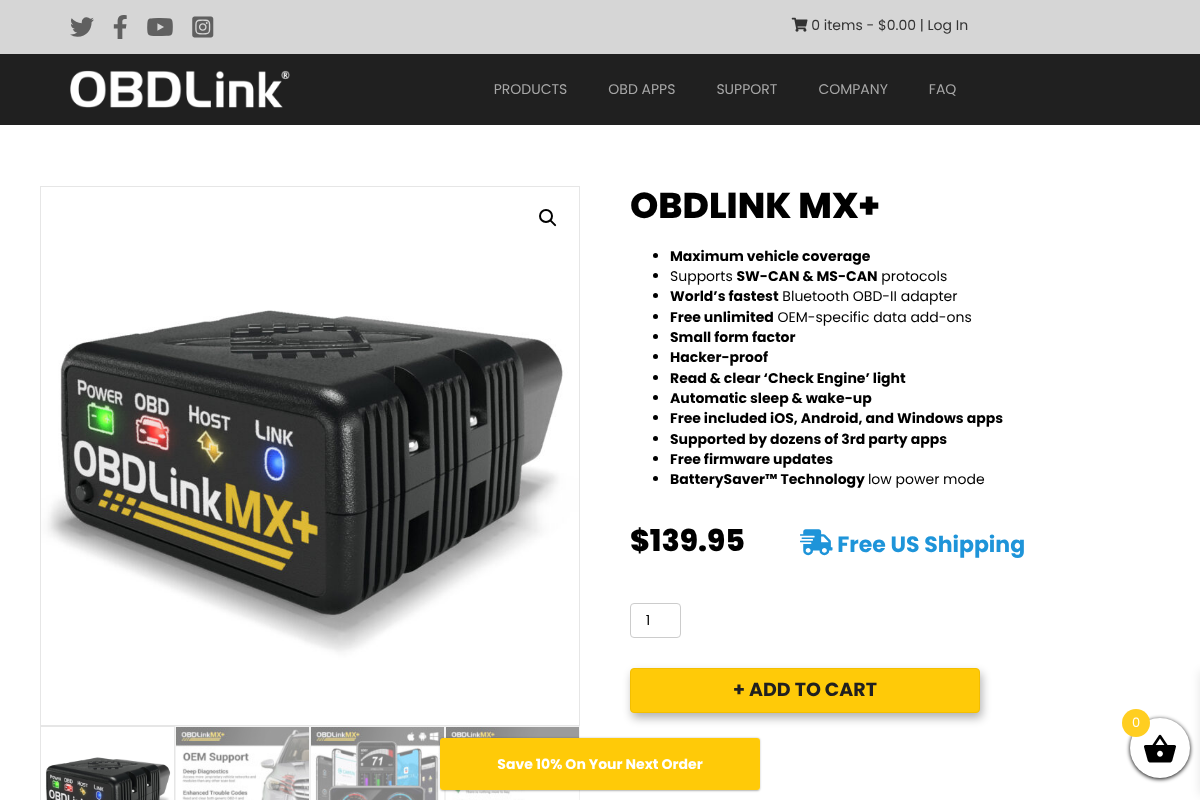
The compatibility sheet below lays out what typical tools can and cannot do through a gateway, so you can match your goal to the right combination before spending money on the wrong one.
9. Weigh a Secure-Gateway Bypass Harness
A bypass harness is a hardware cable that plugs into the gateway’s connectors and routes the OBD-II port around the module, which some independent shops and enthusiasts use for full DIY access. It works, but the trade-offs are real and worth stating plainly: it disables the security feature the gateway provides, it typically must be removed before any dealer visit, and it can affect warranty or insurance considerations, so treat it as a deliberate choice rather than a default.
10. Know When to Hand It to a Professional
Some jobs are not worth the fight. Key and immobilizer programming, module replacement and flashing, and safety-critical work like ADAS calibration all require secured writes and real expertise, and getting them wrong can leave a car undrivable or unsafe. When a task crosses into that territory, an authorized shop or dealer is the right call, gateway or not.
Adapter Compatibility Sheet
| Tool or adapter | Read codes and live data | Bidirectional and programming | How it gets access |
|---|---|---|---|
| Generic ELM327 dongle | Usually yes | No | None; basic reads only |
| OBDLink MX+ with app | Yes | Depends on app and method | Capable app, or a bypass harness |
| Pro scan tool (Autel, Launch, Bosch, Snap-on) | Yes | Yes | AutoAuth login on a supported tool |
| Dealer or factory software | Yes | Yes | Native authorized access |
| Bypass harness plus app | Yes | Yes | Physically routes around the gateway |
This is general information for legitimate vehicle diagnostics and maintenance, not professional or legal advice. Vehicle coverage, tool support, and fees change over time and vary by make, model, and year, so verify current details for your vehicle. A secure gateway is a security feature; bypassing it disables that protection and may have warranty, insurance, or other implications, so confirm what applies to you and consult a qualified technician for programming, key, or safety-related work.
Frequently Asked Questions
Why won’t my OBD2 scanner work on a secure gateway vehicle?
Because a security module is filtering your tool’s commands. On 2018 and newer Stellantis vehicles, the secure gateway lets a scanner read codes and live data but blocks writes, like active tests, resets, and programming, unless the tool is authorized. If reading works but actions fail, that is the gateway, not a broken adapter. Authorized access comes through AutoAuth, a supported tool, or a dealer.
AutoAuth vs a bypass cable: which should I use?
AutoAuth is the official, non-invasive route: register a supported tool, pay a small annual fee, and the gateway stays intact. A bypass harness gives DIY access without a subscription but disables the security feature, must be removed before dealer visits, and can affect warranty or insurance. For most people, AutoAuth with a compatible tool is the cleaner long-term choice.
Can I still read codes with a secure gateway?
Yes. Reading diagnostic trouble codes and viewing live data generally work through the gateway with a standard tool, and clearing codes usually does too. The gateway mainly restricts commands that write to the vehicle. So for ordinary check-engine diagnosis, a gateway rarely stops you; it becomes an obstacle only when you need bidirectional tests or programming.
Which vehicles have a secure gateway?
Most Chrysler, Dodge, Jeep, Ram, and Fiat models from 2018 onward include the Stellantis secure gateway, and Alfa Romeo models as well. The broader industry is heading the same way, with other automakers adding secured diagnostic access on recent vehicles, so if your car is newer and your tool is blocked from writing, check whether a gateway is the reason.
Does a secure gateway bypass cable void the warranty?
It can carry warranty and other risks, which is why it deserves caution. A bypass disables a factory security feature, dealers expect it removed before service, and modifications can complicate warranty or insurance questions depending on your situation. This article does not provide legal advice, so confirm the specifics for your vehicle and coverage before installing one, and consider the authorized route first.
The Bottom Line
A scan tool going quiet on a newer Stellantis vehicle is almost never a dead adapter, it is the secure gateway deciding what gets through. Confirm the car has one, check that reads and live data still work, and separate a write block from a real connection fault. From there, AutoAuth with a supported tool is the clean path to authorized functions, the dealer covers the deepest jobs, and a bypass is a trade-off to weigh rather than a shortcut to grab. For more on keeping up with modern vehicles, browse the YouGottaRead Autos section, including our guide to ‘key not detected’ on push-button-start cars and used EV battery-health checks before you put down a deposit.