Everyone knows the feeling. You round the corner toward security, see the line snaking back past the food court, and do the math on whether you will make your gate. TSA PreCheck is the usual answer, but it is not the only one, and it is not always the fastest fit. Some people cannot enroll in time, some fly internationally, and some just do not want to pay for another five-year membership to save a few minutes.
The good news is that there are real TSA PreCheck alternatives, and they fall into three honest buckets: programs that do everything PreCheck does and more, services that cut a different line entirely, and free habits that quietly shave off time. Knowing which one skips which line is the whole game, so this guide names all eleven and, more importantly, tells you exactly what each one actually gets you past.
The 11 Alternatives at a Glance
- Global Entry: PreCheck plus fast customs, better value abroad.
- NEXUS: cheapest trusted-traveler option if eligible.
- SENTRI: land-border program that includes PreCheck.
- CLEAR Plus: skips the ID line, not screening.
- Mobile Passport Control: free app for faster customs.
- Digital ID in your wallet: speeds the identity check.
- Airline elite or premium lanes: priority security queues.
- A card that refunds the fee: get a program free.
- Off-peak timing: fly when checkpoints are quiet.
- Pack for fast screening: clear standard lanes quicker.
- Airport-specific programs: some offer free reservations.
What PreCheck Actually Skips, and What These Do
Before spending a dime, understand the three different lines at an airport. TSA PreCheck speeds the security screening itself, so you keep your shoes, belt, light jacket, and laptop, and leave liquids in the bag. CLEAR skips the identity-check line before screening. Mobile Passport Control and Global Entry’s customs benefit speed your entry back into the country from abroad, not domestic security at all.
Mixing these up is why people overpay or feel let down. A service that verifies who you are does not exempt you from screening, and a customs app does nothing for a domestic Tuesday-morning line. Keep that map in mind and every option below slots into place.
1. Global Entry
If you fly internationally even once a year, this is usually the smarter buy than PreCheck alone. Global Entry costs $120 for five years and includes TSA PreCheck, so you get the domestic screening benefit plus expedited U.S. customs when you return from abroad. The application adds an interview and a background check, and approval can take time, so apply well ahead of a trip.
The honest catch is eligibility and processing: not everyone qualifies, and interview slots can be scarce. But for the extra cost over PreCheck, getting customs on top makes it the default pick for anyone with a passport in regular use.
2. NEXUS
NEXUS is the quiet bargain of trusted-traveler programs. Aimed at frequent U.S. and Canada travelers, it includes TSA PreCheck and Global Entry benefits, and at around $50 for five years it undercuts both. If you are eligible and travel between the two countries, it is arguably the best value of any option here.
The trade-off is access. Enrollment centers are concentrated near the northern border, and eligibility and interview logistics are narrower than Global Entry, so it fits a specific traveler rather than everyone. When it fits, though, it is hard to beat on price.
3. SENTRI
SENTRI is the southern-border counterpart, built for expedited entry from Mexico by land. Like NEXUS, it bundles TSA PreCheck, so cardholders get the domestic screening perk as part of the package. For people who regularly cross the U.S. and Mexico border, it consolidates two needs into one membership.
It is the most niche option on this list, tied to specific crossings and eligibility, so it is worth it mainly if that border is part of your routine. If it is not, one of the broader programs will serve you better.
4. CLEAR Plus
CLEAR takes a different route through the airport. Instead of screening, it uses your biometrics to verify your identity, letting you skip the ID-check line and get escorted to the front of the physical screening queue. It runs about $219 a year and operates at a growing list of airports and even some stadiums.
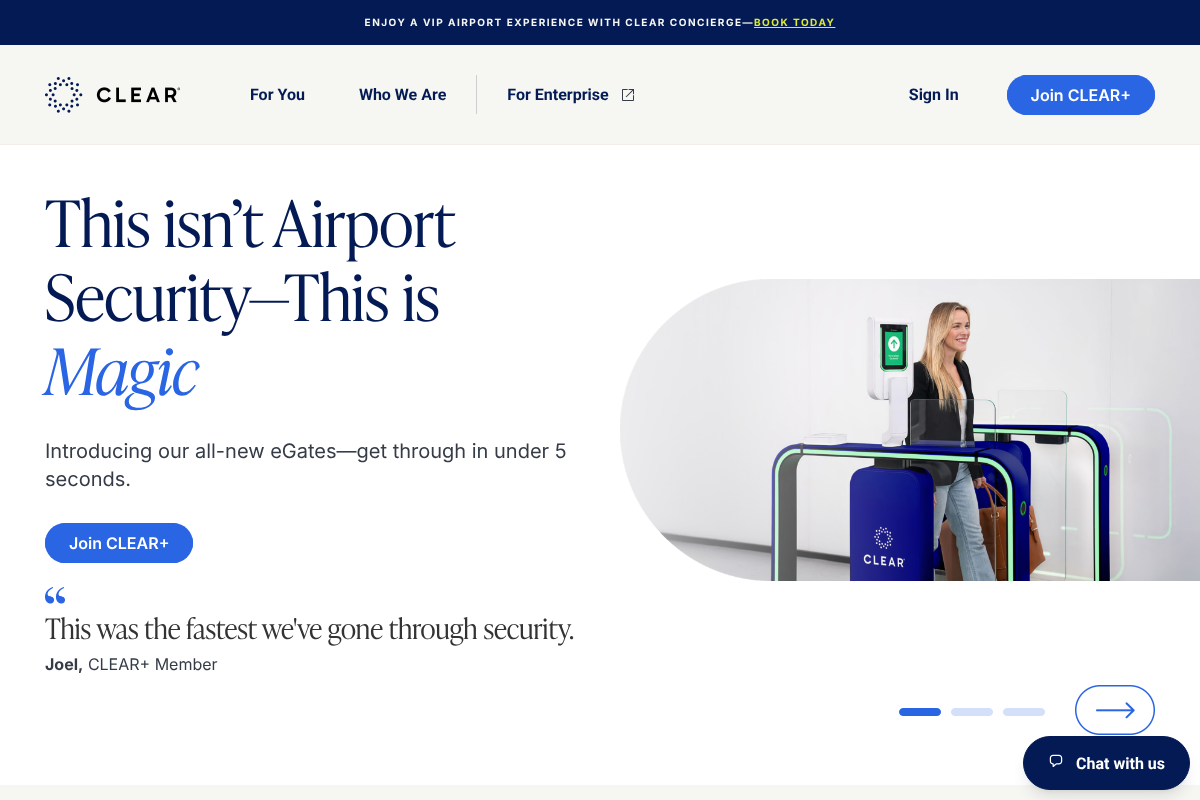
Two honest points. CLEAR is the priciest option here and is a yearly subscription, not a five-year one. And because it handles identity, not screening, it pairs best with PreCheck rather than replacing it. On its own, you still go through standard screening once you reach the front.
5. Mobile Passport Control
Mobile Passport Control is the free one that people forget. It is an official U.S. Customs and Border Protection app that speeds your customs and immigration processing when you arrive from abroad, at a long list of airports and seaports, with no fee and no membership. Submit your information in the app and use the dedicated lane.
Be clear on its limit: it does nothing for domestic security screening. It is a customs tool, so it helps on the way back into the country, not on the Tuesday flight across two states. For international arrivals on a budget, though, free is a strong price.
6. A Digital ID in Your Phone Wallet
The identity check is getting faster on its own. The TSA now accepts mobile driver’s licenses and state digital IDs, stored in Apple Wallet, Google Wallet, or a state app, at a growing number of checkpoints, with facial-comparison technology to match you to the credential. It is free if your state participates and your ID meets REAL ID requirements.
It will not exempt you from screening, and the facial step is voluntary, so you can decline and verify the usual way. But a tap-and-go identity check trims one of the slower parts of the line, and the network of participating checkpoints keeps expanding.
7. Airline Elite Status or a Premium Cabin
Sometimes the fast lane comes with your ticket. Many airlines and airports offer a priority security queue for elite frequent flyers and passengers in first or business class. It is a shorter line to the same screening, not a PreCheck-style screening exemption, but a shorter line is still a shorter line.
Availability varies by airport and airline, and it is not something you buy standalone, so it rewards loyalty or a premium fare rather than a separate purchase. If you already have status or are flying up front, use it.
8. A Credit Card That Refunds the Fee
This is less an alternative than a way to make the others free. Many premium travel cards reimburse the application fee for TSA PreCheck, Global Entry, or CLEAR as a statement credit, sometimes every few years. If you were going to pay an annual-fee travel card anyway, the credit can cover the membership entirely.
Read the card’s terms, since which program is covered and how often varies, and a card with an annual fee only makes sense if you use its other benefits. Used well, though, it turns a paid program into a no-cost perk.
9. Off-Peak Flight Timing
The cheapest speed boost is choosing when to fly. Checkpoints have rush hours, typically early morning and late afternoon, and midday or late-evening departures often mean far shorter lines. Booking around the crowds can beat any program on a good day, for free.
It takes flexibility you may not always have, and holidays scramble the pattern, so it is a tactic rather than a guarantee. Still, pairing an off-peak flight with any other option on this list stacks the odds in your favor.
10. Pack So You Clear Screening Fast
Even in a standard lane, how you pack decides how long you take. Keep liquids and electronics easy to reach, wear slip-on shoes and a simple belt, and empty your pockets before you reach the front. You will move through the regular checkpoint noticeably faster and hold up the line behind you less.
It saves seconds, not the whole wait, and it does not skip any line. But it costs nothing, works everywhere, and makes every other option here smoother, which is why seasoned travelers do it on autopilot.
11. Airport-Specific Programs
Finally, check your specific airport. A handful have piloted free timed-reservation systems that let you book a security slot in advance, and others publish live wait times or run their own fast-lane arrangements. These come and go and vary widely, so they are worth a look on the airport’s official website before a trip.
Because they are local and change often, do not count on one being there. When your home airport does offer a free reservation or a shorter seasonal lane, though, it can be the easiest win of all.
How We Compared These
We focused on what actually shortens time at the airport, and grouped the options by which line each one addresses: security screening, identity verification, or customs. We weighed cost against benefit, factored in who can realistically enroll or qualify, and flagged the honest limits of each, especially where a service is often mistaken for a screening exemption when it is not. Free tactics earned a place when they reliably save time without a purchase.
At a Glance: What Each One Skips
| Option | What it speeds | Rough cost | Best for |
|---|---|---|---|
| Global Entry | Security + customs | $120 / 5 yrs | International flyers |
| NEXUS | Security + customs | ~$50 / 5 yrs | U.S. and Canada travel |
| SENTRI | Security + land border | Paid / 5 yrs | U.S. and Mexico crossings |
| CLEAR Plus | Identity check | ~$219 / yr | Frequent flyers who pair it with PreCheck |
| Mobile Passport Control | Customs only | Free | International arrivals |
| Digital ID | Identity check | Free | Anyone in a participating state |
| Elite / premium lane | Shorter security queue | With ticket / status | Loyal or premium flyers |
| Off-peak, packing, airport apps | General wait | Free | Everyone |
This is general travel information, not official guidance. Program costs, benefits, eligibility, and airport availability change over time, and fees quoted here are approximate. Confirm current details and enrollment requirements on the official TSA and U.S. Customs and Border Protection websites, or the provider’s own site, before applying or relying on any option.
Frequently Asked Questions
What are the best TSA PreCheck alternatives?
For most people, Global Entry is the top alternative, since it includes PreCheck and adds fast customs for $120 over five years. NEXUS is cheaper if you are eligible, and CLEAR speeds the identity line as an add-on. Free options like Mobile Passport Control, a digital ID, off-peak timing, and smart packing reduce airport time without another paid membership.
TSA PreCheck vs Global Entry vs CLEAR: what is the difference?
PreCheck speeds security screening on domestic flights. Global Entry does that and also fast-tracks customs when you return from abroad, for a bit more money. CLEAR is a separate paid service that verifies your identity to skip the ID line, but it is not a screening exemption. Many frequent travelers combine CLEAR with PreCheck rather than choosing one.
Is CLEAR worth it if I already have PreCheck?
It can be, at busy airports. CLEAR gets you through the identity check quickly and escorts you toward the front, while PreCheck handles the screening itself, so together they cut both lines. If your home airports are rarely crowded, PreCheck alone is usually enough, and CLEAR’s roughly $219 yearly fee is the priciest option here.
Does Mobile Passport Control replace TSA PreCheck?
No. Mobile Passport Control is a free app that speeds customs and immigration when you arrive in the United States from abroad. It does nothing for domestic security screening, which is what PreCheck handles. They solve different problems, so an international traveler might use MPC on arrival and PreCheck or Global Entry for the outbound security line.
What free ways can I speed up airport security?
Several. Use Mobile Passport Control for international arrivals, add a digital ID to your phone wallet where your state supports it, fly at off-peak times, and pack so liquids and electronics are easy to pull out. Check your airport’s website too, since some offer free timed reservations or publish live wait times. Stacking these often rivals a paid program.
The Bottom Line
TSA PreCheck is a fine default, but it is one option among many, and the right pick depends on which line you actually need to skip. International flyers should look at Global Entry or NEXUS, crowded-airport regulars can add CLEAR, and everyone benefits from a digital ID, off-peak timing, and packing that clears the belt fast. Match the tool to the line, and confirm current details on the official sites before you pay. For more on moving through airports smoothly, browse the YouGottaRead Travel section, including our guide to Real ID edge cases at the DMV and our airline rebooking chat scripts for a schedule change.