


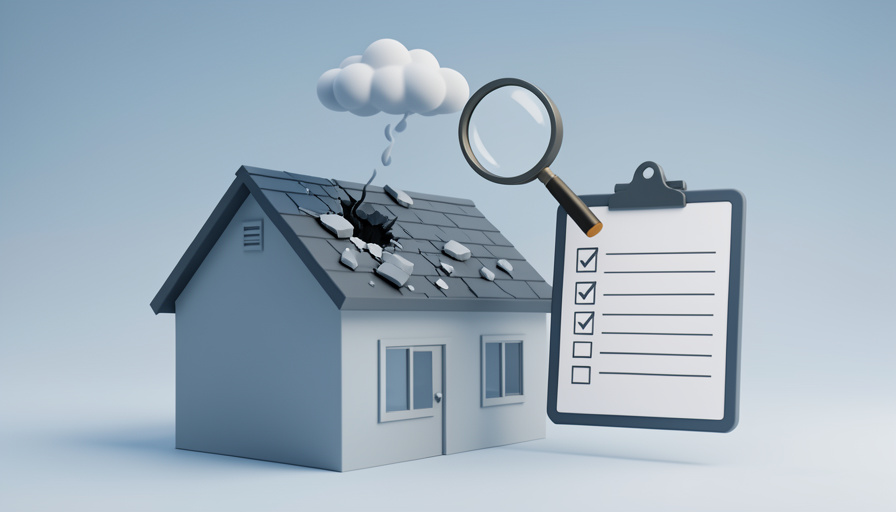
The hail stops, and before you have even walked outside to look, a truck is idling at the curb and someone is on your porch with a clipboard, telling you they spotted damage on your roof and can start tomorrow. After a big storm, this happens on repeat, because out-of-town crews follow the weather to chase insurance money. Plenty of storm-response roofers are honest and busy. A meaningful few are gone by spring with your deposit, and the way you tell them apart is the questions you ask before you sign anything.
The questions to ask before hiring a roofer after a storm are less about shingle brands and more about legitimacy: who they are, where they will be next year, and what they are quietly asking you to sign over. Storm-chasers rely on urgency and confusion, so slowing down and working through this list is your best protection. Here are the eleven questions, and the answers that should make you show someone the door.
The 11 Questions at a Glance
- Are you licensed and insured? Ask for current, verifiable proof.
- Do you have a local office? Not a P.O. box.
- Can I get local references? Recent addresses in my area.
- Any assignment of benefits to sign? That hands over your claim.
- Will you cover my deductible? That offer is insurance fraud.
- Is the contract fully written? Scope, materials, price, and dates.
- How much deposit, paid how? Never all cash upfront.
- Who pulls the permit? A licensed contractor should.
- Will you provide lien waivers? From you and suppliers.
- What warranties do I get? And will you honor them.
- How are supplements billed? Get changes approved first.
Why a Storm Brings Out the Wolves
Big hail and wind events draw traveling crews who work a region hard for a few weeks and then move to the next disaster. Their whole model runs on speed: knock on doors, find or claim damage, get a signature the same day, and collect before you have time to check them out. The honest local roofer is often booked and less pushy, which is exactly why the aggressive stranger reaches you first.
None of that means you should not repair your roof quickly. It means the pressure to decide instantly is the warning sign, and the questions below are how you convert a high-pressure porch pitch into a decision you can actually verify.
1. Are You Licensed, Registered, and Insured?
Start with the basics that scammers cannot fake. Ask for their contractor license or registration number where your state requires one, proof of general liability insurance, and workers’ compensation coverage, then verify the license yourself with your state or county rather than trusting a laminated card.
Workers’ comp matters more than people realize: if an uninsured worker is hurt on your roof, you can be on the hook. A contractor who cannot or will not hand over current copies of license and insurance is telling you everything you need to know.
2. Do You Have a Permanent Local Office and History Here?
Storm-chasers are transient by design. Ask where their physical office is and how long they have worked specifically in your area, and be wary of an answer that is a P.O. box, a mail-drop suite, an out-of-state plate, or a phone number that is the only way to reach them.
A roofer with a real local presence has a reputation to protect and will still be reachable when a leak shows up in two years. One who followed the storm into town has little reason to stand behind the work once the check clears.
3. Can You Give Me Local References and Recent Job Addresses?
Reputable roofers have a trail you can follow. Ask for references and the addresses of recent jobs in your zip code, then actually call a couple and, if you can, drive by to see the work and ask how the crew handled problems.
Vague references, jobs only in far-off towns, or a refusal to share any are red flags. Local, checkable references are hard for a fly-by-night operation to produce, which is precisely why asking for them filters so many out.
4. Are You Asking Me to Sign an Assignment of Benefits?
This is the signature that costs people the most. An assignment of benefits, or AOB, transfers your insurance claim rights to the contractor, so once you sign, they deal directly with your insurer, receive the settlement, and decide what work gets done. Homeowners sometimes learn months later that the contractor settled for less and did less.
You rarely need to sign your claim away to get your roof fixed. Read anything labeled AOB, assignment, or “authorization to negotiate” carefully, and be willing to walk if a contractor insists you hand over control of your own claim.
5. Are You Offering to Waive or Cover My Deductible?
It sounds generous and it is a crime. In Texas and many other states, a contractor who offers to waive, absorb, or “eat” your insurance deductible is participating in insurance fraud, because the deductible is your contractual obligation to your insurer, not something a roofer can legally erase.
A company willing to commit fraud to win your job will cut corners elsewhere. Treat “we’ll cover your deductible” or an inflated estimate built to hide it as a reason to end the conversation, not a discount to celebrate.
6. Is This a Complete Written Contract?
Everything real goes in writing. Insist on a full contract that spells out the scope of work, the exact materials and shingle brand, the total price, the payment schedule, and the start and completion dates, rather than a one-line estimate or a same-day digital form you barely read.
A vague or verbal agreement leaves you with no way to hold anyone to anything. If the contract is thin or the salesperson rushes you past the details, that is the moment to slow down, not sign.
7. How Much Deposit, and How Do I Pay?
Payment terms reveal a lot. Be cautious of anyone demanding a large deposit in cash before work starts, and follow the standard consumer guidance to pay by credit card or check and to avoid wire transfers, gift cards, payment apps, and cryptocurrency, which are the tools of scammers, as the FTC’s disaster-scam guidance spells out.
A reasonable deposit tied to milestones, with the balance paid as stages are completed and approved, protects you. Full payment up front, or paying before materials even arrive, hands your bargaining power to someone you just met.
8. Who Pulls the Building Permit?
Permits are a quiet honesty test. Most roof replacements require a permit, and a licensed contractor should pull it in their own name, since that puts them on record with the local building department and subjects the work to inspection.
If a roofer asks you to pull the permit yourself, or says the job does not need one to avoid the step, be skeptical. Homeowner-pulled permits can shift liability onto you, and skipping a required permit can haunt you when you sell the house.
9. Will You Provide Lien Waivers From You and Your Suppliers?
You can pay in full and still get billed twice. If a contractor does not pay their crew or their materials supplier, those parties can place a mechanic’s lien on your home even though you already paid the roofer, which is a nasty surprise months after the job.
Ask for lien waivers or releases from the contractor and their major suppliers as payments are made. A legitimate company handles this routinely, and reluctance to provide waivers is a sign the money side may not be as solid as it looks.
10. What Warranties Do I Get, and Will You Honor Them?
A warranty is only as good as the company behind it. Ask about both the manufacturer’s warranty on the shingles and the contractor’s own workmanship warranty, and get the terms and length in writing rather than a spoken promise of “lifetime” coverage.
Then remember question two: a storm-chaser who leaves town cannot honor a ten-year workmanship warranty no matter what the paper says. A durable local company is what makes a long warranty meaningful instead of decorative.
11. How Are Insurance Supplements and Change Orders Billed?
Roofing claims often need supplements, and that is where billing games hide. A supplement is a legitimate request to the insurer for additional payment when the adjuster’s estimate misses real costs, and honest roofers file them, but you should understand how yours handles the process and who approves added work.
Insist that any change order or extra charge be documented and approved by you before the work happens, and that supplement money follows the actual repair. Clear, written handling of supplements keeps a normal part of the claim from becoming a channel for padding the bill.
This is general information about hiring a roofing contractor, not legal, insurance, or financial advice. Laws on licensing, deductibles, assignment of benefits, and liens vary by state and change over time, and every insurance policy is different. Verify a contractor’s license with your state or local authority, confirm details with your own insurer, and consult a qualified professional before signing a contract or claim document you are unsure about.
Frequently Asked Questions
What questions should I ask before hiring a roofer after a storm?
Confirm they are licensed, insured, and locally established with checkable references. Ask whether they want you to sign an assignment of benefits, whether they are offering to cover your deductible, and how deposits and supplements are handled. Insist on a full written contract, clarity on who pulls the permit, lien waivers, and warranties you can verify will be honored.
Why is it illegal for a roofer to waive my insurance deductible?
Your deductible is a contractual obligation to your insurer, so a contractor who waives or absorbs it is helping misrepresent the true cost of the claim. In Texas and many other states this is expressly insurance fraud. An offer to “cover your deductible,” often hidden in an inflated estimate, is a strong reason to walk away rather than a legitimate deal.
Should I sign an assignment of benefits with my roofer?
Usually not. An assignment of benefits transfers your insurance claim rights to the contractor, letting them control the claim, receive the settlement, and decide the work, which can leave you with less repair than expected. You can typically have your roof fixed without one, so read any AOB carefully and be cautious of a contractor who insists on it.
Local roofer vs storm-chaser: which should I hire after a storm?
A rooted local roofer is almost always the safer choice, because they can be verified, will be reachable for warranty issues, and have a reputation to protect. Storm-chasers may work fast but often lack a local office, checkable references, and any incentive to return. If you use a traveling crew, vet them even harder against this list.
How much deposit should I pay a roofer up front?
A modest deposit tied to milestones is normal; a demand for large cash up front is a warning sign. Pay by credit card or check rather than wire transfer, gift card, payment app, or cash, and structure the balance so you pay as stages are completed and approved. Never pay the full amount before the work is done.
The Bottom Line
A storm damages more than roofs. It opens a short window where pressure and confusion make bad hiring decisions easy. The defense is patience and these eleven questions: verify the license and local roots, refuse to sign your claim away or let anyone waive your deductible, demand a full written contract with sane payment terms, and confirm permits, lien waivers, warranties, and supplement handling before work begins. The honest roofers will answer every one without flinching. For more on protecting your home and money, browse YouGottaRead’s Home & Garden section, including our guide to questions before installing a heat pump water heater in a garage and our Business section for handling the paperwork side of a claim.


