


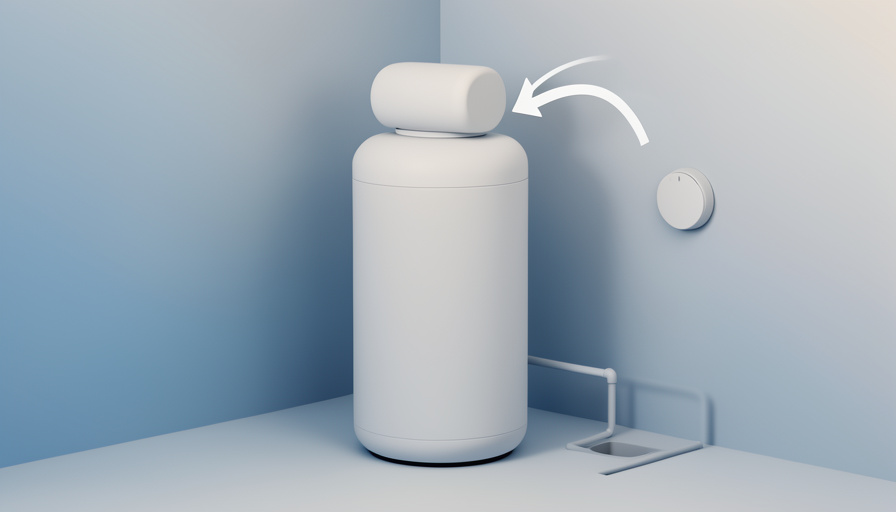
A heat pump water heater looks like an easy win. It can cut the energy a traditional electric tank uses by more than half, and the garage seems like the obvious place to put one, out of the way and near the plumbing. Then reality arrives: it blows cold air into a space that is already freezing in January, it drips condensate onto the floor, and it hums loudly enough to hear through the wall. The technology is excellent. Whether a garage is the right home for it depends on a handful of questions most buyers never think to ask.
The questions to ask before installing a heat pump water heater in a garage are mostly about the space, not the tank, because these units pull heat from the surrounding air and give back cold, dry air and a steady trickle of water. Get the garage conditions right and it runs efficiently for years. Get them wrong and it limps along in backup mode. Here are the nine to work through before you buy.
The 9 Questions at a Glance
- Does the garage stay above 40°F? Cold air kills efficiency.
- Is there enough air volume? Most units want 700 to 1,000 cubic feet.
- Where does the condensate drain? It sheds gallons daily.
- Can you handle cooler air? It chills and dries the garage.
- How loud is it? Check what shares the wall.
- Is there a 240-volt circuit? Or do you need 120-volt.
- Is there clearance around it? Airflow and service both need room.
- Will recovery meet demand? Heat-pump mode reheats slowly.
- What rebates apply now? The federal credit has changed.
How a Heat Pump Water Heater Treats a Garage
A heat pump water heater works like a refrigerator in reverse: it harvests warmth from the surrounding air to heat your water, then exhausts air that is colder and drier than what it took in. In a garage, that means the unit’s performance is tied to how warm the space stays, and the garage itself becomes a little cooler and less humid whenever the unit runs.
That trade is fine in a mild climate or a warm attached garage and a problem in a freezing detached one. The questions below sort out which situation you have, so the decision is made before the tank is bolted down rather than discovered the first cold week.
1. Does the Garage Stay Above 40°F All Winter?
This is the make-or-break question. Heat pump water heaters run most efficiently when the surrounding air stays between about 40°F and 90°F, and when the temperature drops below 40°F the efficiency falls sharply and the unit leans on its backup electric elements, erasing much of the savings you bought it for.
In a warm or attached garage this is a non-issue. In a cold, uninsulated, or detached garage in a northern climate, a standard model may spend winter in resistance mode. If that describes your space, look at a cold-climate model or a different location before committing.
2. Is There Enough Air Volume Around It?
These units need a supply of air to draw heat from, and a cramped space starves them. Many manufacturers, including major brands, call for roughly 700 to 1,000 cubic feet of air around the unit to run without extra venting, per ENERGY STAR’s design guidance, so a tight closet-sized bay will not do.
An open garage usually clears this easily. If yours does not, the fixes are ducting the unit to draw and exhaust air elsewhere, or fitting louvered doors on an enclosure. Check your chosen model’s exact air-volume spec, because it varies, and plan the space around it.
3. Where Will the Condensate Drain?
Pulling heat from air also pulls moisture out of it, so the unit produces condensate, often on the order of one to three gallons a day. That water has to go somewhere reliable, whether a nearby floor drain, a gravity line run to a drain, or a small condensate pump if no drain sits low enough.
The line has to slope downward the whole way, since no part of it can rise above the unit’s discharge port. A garage without a floor drain is a common surprise, so confirm your drainage plan before install day rather than watching a puddle form under the tank.
4. Can You Live With Cooler, Drier Garage Air?
The cold exhaust is a feature or a nuisance depending on the season and the room. In summer, a heat pump water heater pleasantly cools and dehumidifies the garage. In winter, it makes an already cold space colder, which matters if you use the garage as a workshop, or if anything stored there, including water pipes, is sensitive to a chill.
Think about what lives in the garage and how you use it. If freezing pipes or a workshop you actually spend time in are concerns, the extra cold air is a real cost to weigh, not a footnote.
5. How Loud Is It, and What Is on the Other Side of the Wall?
Heat pump water heaters have a fan and a compressor, and they are audible. Most run around 40 to 50 decibels, similar to a refrigerator, and some climb toward 60 during hard work in cold weather, which is a frequent complaint when the unit sits against a bedroom or living-room wall.
In a detached garage or one buffered from living space, the sound rarely bothers anyone. If the tank will share a wall with a bedroom, plan for that noise now, whether by choosing a quieter model, adding isolation, or picking a spot farther from where people sleep.
6. Do You Have a 240-Volt Circuit, or Need a 120-Volt Model?
Most heat pump water heaters require a dedicated 240-volt, 30-amp circuit, and if your garage does not already have one near the tank, running it is an added electrical cost worth pricing before you buy.
The newer option is a 120-volt plug-in model, including cold-climate versions that reached the market recently, which can slide onto an existing standard outlet and avoid a panel upgrade. They reheat more slowly, so weigh that against the wiring savings, but for a garage without 240-volt service they can make the whole project far simpler.
7. Is There Enough Clearance for Airflow and Service?
Even with plenty of air in the room, the unit needs breathing space right around it. Plan for roughly two feet of clearance in front for filter cleaning and service, plus several inches on the sides and back so the intake and exhaust are not choked against a wall.
Tucking the tank into a tight corner throttles its airflow and makes maintenance miserable. Measure the spot against your model’s clearance requirements before install, and leave room to actually reach the filter you will need to clean.
8. Will Recovery Keep Up With Your Hot-Water Demand?
Efficiency comes at the price of speed. In pure heat-pump mode these units reheat a tank more slowly than a standard electric or gas heater, and owners in cold spaces sometimes report recovery stretching for hours, which can leave a big household short on back-to-back showers.
Match the tank size and the unit’s first-hour rating to your peak demand, and know that a hybrid mode, which kicks in the electric elements when needed, trades some efficiency for faster recovery. Size up or plan to use hybrid mode if your mornings are busy.
9. What Rebates and Permits Apply Now?
The incentive picture changed. The federal 25C Energy Efficient Home Improvement Credit, which offered up to $2,000 toward a qualifying heat pump water heater, expired for equipment placed in service after December 31, 2025, so a new install in 2026 no longer qualifies for that specific federal credit.
That makes state and utility rebates, and the state-administered federal home energy rebate programs where they are running, more important to check than ever. Confirm what is actually available in your area, and remember a garage install still typically needs a permit and licensed electrical and plumbing work.
This is general home-improvement information, not professional, electrical, plumbing, or tax advice. Manufacturer specifications, local codes, permit rules, and rebate programs vary by product and location and change over time. Confirm the exact requirements for your model with the manufacturer and your local building department, verify current incentives with the program or a tax professional, and use licensed contractors for electrical and plumbing work.
Frequently Asked Questions
What should I ask before installing a heat pump water heater in a garage?
Start with whether the garage stays above 40°F in winter, since cold air cripples efficiency. Then confirm you have enough air volume (often 700 to 1,000 cubic feet), a condensate drain, a 240-volt circuit or a 120-volt model, clearance for airflow and service, and recovery that meets your hot-water demand. Finally, check current rebates and permit requirements.
Do heat pump water heaters work in a cold garage?
They work best between about 40°F and 90°F. In a garage that drops below 40°F, a standard unit loses efficiency and falls back on its electric elements, which erases much of the savings. A cold-climate model handles lower temperatures better, and ducting the unit to warmer air or choosing a different location are the usual fixes.
How much noise does a garage heat pump water heater make?
Most produce around 40 to 50 decibels, comparable to a refrigerator, and some reach roughly 60 decibels when working hard in cold weather. In a detached or buffered garage that is rarely a problem, but if the tank shares a wall with a bedroom, plan for the sound with a quieter model, isolation, or a location farther from living space.
240-volt vs 120-volt heat pump water heater: which is better for a garage?
A 240-volt unit reheats faster and is the traditional choice, but it needs a dedicated 240-volt circuit that many garages lack. A newer 120-volt plug-in model, including cold-climate versions, uses a standard outlet and avoids a panel upgrade, at the cost of slower recovery. If running 240-volt service is expensive, a 120-volt model can simplify the whole install.
Is there still a tax credit for a heat pump water heater in 2026?
The federal 25C credit that offered up to $2,000 for a qualifying heat pump water heater expired for equipment placed in service after December 31, 2025, so a new 2026 install does not qualify for it. State and utility rebates, and state-administered home energy rebate programs where active, may still help, so check what is currently offered in your area.
The Bottom Line
A heat pump water heater can be a genuinely great upgrade, but a garage is a specific environment that either suits it or fights it. Warm enough, roomy enough, drained, wired, and buffered from bedrooms, and it will quietly cut your bills for years. Cold, cramped, or sharing a bedroom wall, and it will underperform and annoy you. Work through these nine questions first, and check the current rebates rather than an expired one. For more on planning home-system upgrades, browse YouGottaRead’s Home & Garden section, including our guides to checking smart-thermostat compatibility with a heat pump and questions before switching to an induction range in an older home.


