



A pre-payment checklist for spotting the W-9 problems that turn into fraud losses and year-end 1099 penalties.
A W-9 looks like a formality, so most people file it and move on. Then a payment bounces to a stranger’s bank account, or a January 1099 gets rejected and the penalty notices start. One small business owner recently posted that a batch of bad contractor info left them owing about $1,650 in filing penalties, all traceable to details nobody checked at onboarding. This W-9 red flags checklist is the two-minute review that prevents that, and it matters more in 2026 because the rules just changed.
Starting with 2026 payments, the 1099-NEC and 1099-MISC reporting threshold jumped from $600 to $2,000, and the backup withholding trigger moved with it. That is more room for a bad W-9 to slip through unnoticed until it costs you. Here is what to catch before the money leaves.
In Brief
The eight W-9 red flags worth stopping a payment over:
- Name and TIN do not match IRS records
- Unsigned, undated, or visibly altered form
- Tax classification contradicts the invoice or entity
- Arrives with a bank-account change request
- PO box only or no verifiable business footprint
- Foreign vendor sent a W-9 instead of a W-8
- Exempt or backup-withholding boxes filled in wrong
- Old form or sent over an insecure channel
| # | Red flag | What to check | Action if it fails |
|---|---|---|---|
| 1 | Name/TIN mismatch | IRS TIN Matching before first payment | Request a corrected W-9; withhold if unresolved |
| 2 | Unsigned or altered | Signature, date, no whited-out fields | Reject and request a clean, signed copy |
| 3 | Classification mismatch | Entity box vs the name on the invoice | Confirm the legal payee before paying |
| 4 | Bank change attached | Verify by phone on a known number | Freeze the change until confirmed |
| 5 | PO box / no footprint | Real address, website, prior clients | Add verification steps before onboarding |
| 6 | W-9 from a foreign vendor | Should be a W-8BEN or W-8BEN-E | Request the correct W-8 form |
| 7 | Wrong exemption boxes | Exempt codes match the entity type | Ask the vendor to correct or justify |
| 8 | Stale or insecure | Current form, encrypted delivery | Refresh the W-9; use a secure portal |
Table of Contents
1. The name and TIN do not match IRS records

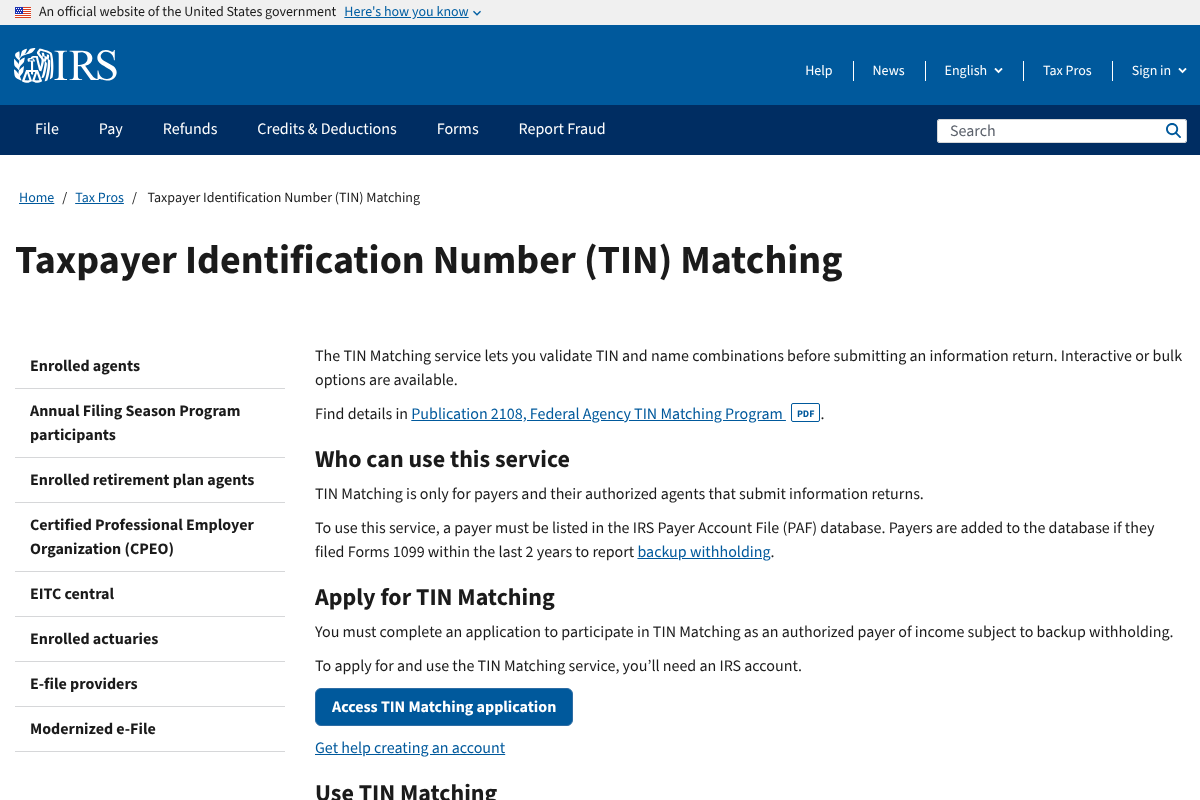
This is the flag that quietly costs you at tax time. A sole proprietor writes their business name on the top line but gives an SSN, or an LLC lists a personal name against an EIN, and the combination fails the IRS check. You will not see it until a 1099 bounces back as a CP2100 notice months later.
Validate the name and number together before the first payment. The IRS TIN Matching service confirms a TIN and name combination in seconds, though you have to be an enrolled payer that filed 1099s in the last two years to use it. If a match fails and the vendor cannot fix it, you may be required to start backup withholding, so treat a mismatch as a stop-payment issue, not a paperwork nuisance.
2. It is unsigned, undated, or visibly altered
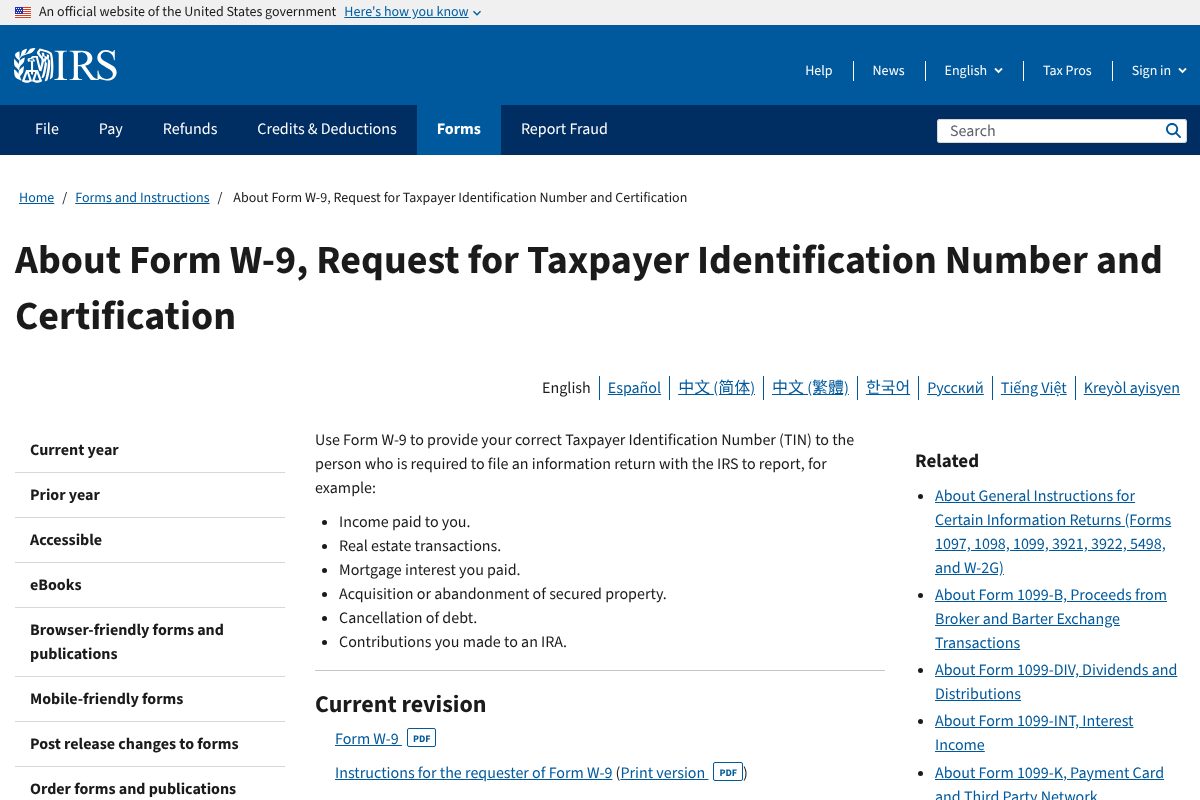
A W-9 without a signature and date is not a completed form, and an accepted one becomes your proof that you collected the right information in good faith. Whited-out boxes, a TIN that looks typed over, or a signature that does not match the business name all deserve a second look.
Compare what you received against the current form on the IRS Form W-9 page. An old layout is a hint the vendor is recycling a years-old file that may no longer reflect their entity or address. When in doubt, ask for a fresh, signed copy. It costs the vendor two minutes and saves you a correction later.
3. The tax classification contradicts the invoice
Line 3 asks how the vendor is taxed: individual or sole proprietor, C corp, S corp, partnership, or LLC with a specific election. When that box says one thing and the invoice comes from another, you have a mismatch that ends up on the wrong 1099, or on none at all.
The classic version: the W-9 is signed by a person as an individual, but the invoice and the bank account belong to an LLC. Pay the wrong legal entity and you have a bookkeeping mess and a possible liability question if the work goes bad. Confirm that the name on the W-9, the invoice, and the payee bank account all point to the same legal party before you release funds.
4. It shows up alongside a bank-account change
Treat any new W-9 that arrives bundled with “and please update our payment details” as guilty until proven innocent. A request to change an account or routing number is the single most dangerous event in accounts payable, and fraudsters pair it with a fresh-looking W-9 to make the switch feel routine.
The tell is usually urgency plus a nudge toward secrecy, often from an email address that is one character off the real one. Verify every banking change out of band: call the vendor on a number you already have, not the one in the email. The FTC’s guidance on business email imposters is blunt about this, and a two-minute phone call is cheaper than a five-figure wire you cannot claw back.
5. The address is a PO box only, or the vendor has no footprint


A brand-new vendor, a PO box for an address, one client on file, and someone inside your company vouching for them a little too eagerly: none of these is proof of fraud on its own, but together they are the profile of a fake vendor set up to catch a single large payment.
Do a light background pass before onboarding. Does the business have a real street address, a working website, and a phone number that connects to a human? Can someone other than the person who submitted the vendor confirm they exist? Separating who sets up a vendor from who approves the payment closes the most common internal-fraud gap, and it takes minutes to build into your process.
6. A foreign vendor sent a W-9 instead of a W-8
The W-9 is for US persons only. A non-US contractor or company should send a W-8BEN (for individuals) or W-8BEN-E (for entities), which document foreign status and any treaty benefits. A foreign vendor who hands you a W-9 either misunderstands the form or is trying to look domestic.
Getting this wrong changes your withholding obligations entirely, since foreign payments can carry withholding and different reporting on Form 1042-S. If a vendor is based abroad, do not accept a W-9 as a shortcut. Request the right W-8, and loop in a tax professional if the payments are large or ongoing.
7. The exempt or backup-withholding boxes are wrong
The W-9 has a field for exemption codes, used mainly by corporations and certain entities that are exempt from backup withholding or FATCA reporting. A freelancer or single-member LLC claiming an exemption code they do not qualify for is a red flag, whether it is a misunderstanding or an attempt to dodge withholding.
It matters because backup withholding is still 24% of the payment when it applies, and you, the payer, are on the hook for remitting it on Form 945 if you should have withheld and did not. If an exemption claim does not fit the entity type on line 3, ask the vendor to correct it or explain it before you rely on it.
8. It is an old form or came over an insecure channel
A W-9 carries a Social Security or employer ID number, which makes it a small identity-theft package in a plain email attachment. A vendor who emails it unencrypted is careless with their own data, and a copy sitting in your inbox is a liability for you too. Collect W-9s through a secure upload or portal, and store them somewhere access-controlled rather than a shared drive.
Age is the other half of this flag. A W-9 does not technically expire, but one from several years ago may predate a name change, an address move, or a switch from sole proprietor to LLC. Refresh it when a vendor’s details change, and re-collect on a set schedule for anyone you pay regularly.
How We Chose These
This checklist prioritizes the red flags that carry a real financial or legal cost, not every box on the form. Each one maps to a concrete downside: a fraud loss, a backup-withholding obligation, a rejected 1099, or a data-security exposure. We weighted flags that are cheap to check but expensive to miss, and that a non-specialist in accounts payable can verify in a couple of minutes before releasing a payment.
This article is general information, not tax or legal advice. Tax rules change and depend on your situation, so confirm current requirements with the IRS or a qualified tax professional before acting.
The Bottom Line
Most W-9 disasters are quiet at the moment they happen and loud at tax time. If you only build two habits, make them these: match the name and TIN before the first payment, and never change a vendor’s bank details without a verifying phone call. Those two catch the costliest failures, fraud and 1099 penalties, before they land. For related reading, see YouGottaRead’s take on common small-business finance mistakes, and browse the wider Business section for more on vendor and payment operations.
Frequently Asked Questions
What should a W-9 red flags checklist include?
At minimum, check that the name and TIN match IRS records, the form is signed and dated, the tax classification matches the invoicing entity, and no bank-account change is riding along with it. Those four catch most fraud and 1099 problems. The full list above adds foreign-vendor, exemption, and data-security checks.
How do I verify a vendor’s TIN before paying?
Use the IRS TIN Matching service, which confirms a name and TIN combination before you file an information return. You must be an enrolled payer that has filed 1099s in the last two years. If a vendor’s TIN fails and they cannot correct it, you may need to begin backup withholding.
What is backup withholding and when does it apply?
Backup withholding is a flat 24% the payer holds back and sends to the IRS when a vendor’s TIN is missing or wrong, or the IRS instructs it. For 2026, it generally applies once cumulative payments to a vendor reach $2,000, up from the old $600 trigger. The payer remits it on Form 945.
Does a W-9 expire?
No, a W-9 has no formal expiration. But you should collect a new one whenever a vendor’s name, address, or tax classification changes, and it is good practice to refresh W-9s periodically for vendors you pay on an ongoing basis.
What should a foreign vendor submit instead of a W-9?
A non-US individual should submit a W-8BEN, and a non-US entity should submit a W-8BEN-E. These establish foreign status and any tax-treaty benefits. Accepting a W-9 from a foreign vendor can leave you with the wrong withholding and reporting, so request the correct W-8.


