


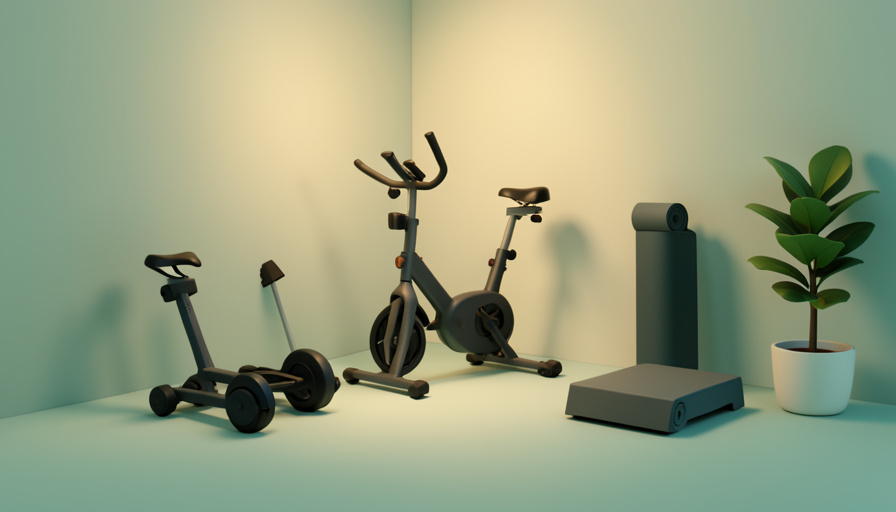
A treadmill is a wonderful machine in exactly the wrong place. Drop one into a small apartment and it eats half the room, hums and thuds through the floor, and turns every sprint into a negotiation with whoever lives below you. If you have ever stopped a workout early because you could feel the neighbor’s ceiling shaking, you already know the problem is not your motivation, it is the equipment.
The best treadmill alternatives for a small apartment do three things a treadmill struggles with: they fold or tuck away, they stay quiet enough to keep the peace, and they still let you hit hard interval work with fast changes in effort. Below are seven that clear all three bars, from the whisper-quiet magnetic bike to the fold-flat climber, with honest notes on noise so you can pick without dreading a knock on the door.
The 7 Alternatives at a Glance
- Magnetic exercise bike: the quietest option for sprint intervals.
- Magnetic rowing machine: full-body intervals that stores upright.
- Vertical climber: intense intervals from a tiny footprint.
- Rebounder: low-impact bounce intervals that spare the floor.
- Folding elliptical: smooth, quiet, joint-friendly interval cardio.
- Mini stepper: cheap, tiny, and surprisingly effective for bursts.
- Jump rope with a mat: classic HIIT, with the biggest noise caveat.
What Makes a Good Apartment Interval Machine
Three constraints do the deciding in a small space. The machine has to shrink, either folding down or standing upright against a wall, so it is not always underfoot. It has to run quietly, which usually means magnetic resistance or a low-impact motion rather than pounding feet. And it has to support intervals, letting you swing quickly between easy and all-out through resistance, cadence, or a built-in timer.
Impact is the hidden factor for anyone with a downstairs neighbor. Jumping and running send sound straight through the floor, so the friendlier picks keep your feet planted or land you softly on a mat. Keep those three constraints in mind and the list below sorts itself by how well each one fits your exact apartment.
1. A Magnetic Exercise Bike
For quiet interval work, a magnetic-resistance exercise bike is the safest bet in an apartment. The magnetic brake makes almost no sound, your feet never leave the pedals so nothing thuds through the floor, and a compact upright or indoor cycle takes up little more space than a chair.
Intervals are easy to program: crank the resistance and cadence for a hard 30 seconds, then spin easy to recover, and repeat. It is low-impact enough for sore knees and quiet enough for early mornings, which is why it tops most apartment lists. The main limit is that it trains mostly your legs, so pair it with some upper-body work.
2. A Magnetic Rowing Machine
A rower gives you full-body intervals in a footprint that stands upright against a wall when you are done. Magnetic and magnetic-air hybrid rowers stay quiet, and because you are seated and gliding rather than pounding, the floor below you barely notices. Powerful pulls followed by easy strokes make for excellent intervals, tracked by the monitor’s time and distance.
One honest note on noise: pure air rowers, the fan-flywheel kind, produce a distinct whooshing sound that rises with effort, so if silence is your priority, choose a magnetic model. Either way, a rower works your legs, back, and arms at once, which makes it one of the most efficient interval tools you can fit in a small room.


3. A Vertical Climber
A vertical climber delivers some of the hardest intervals per square foot of any machine here. You climb against your own body weight in a standing motion, which torches your heart rate fast, and the whole frame folds nearly flat to slide behind a door or under a bed.
Because it runs on your weight rather than a motor or fan, it is naturally quiet, with only the soft sound of the mechanism moving. Go hard for short climbs and rest between them for textbook intervals. It is demanding, so ease in, and stand it on a mat to keep any frame movement from tapping the floor.
4. A Rebounder
A rebounder, or mini fitness trampoline, is a low-impact way to get real interval cardio without hammering the floor. The elastic surface absorbs your landings, so bouncing, jacks, and high knees that would boom through a normal floor become far gentler on the room below, while still lifting your heart rate quickly.
Bungee-corded rebounders are quieter than spring models, and a mat underneath adds insurance. Alternate hard bouncing intervals with light jogging in place to structure a session. It folds or stands on its side for storage, and it is a favorite for anyone who wants the feel of jumping cardio without the impact that gets you complaints.
5. A Folding Elliptical
A folding or compact elliptical offers smooth, low-impact intervals with your feet gliding rather than striking. The motion is easy on knees and hips, the better models run quietly on magnetic resistance, and folding frames tuck away between sessions instead of dominating the room.
For intervals, raise the resistance and quicken your stride for a hard push, then back off to recover. Ellipticals ask more floor space than a bike or stepper, so measure first, but for a joint-friendly, quiet substitute that still lets you work hard in waves, a compact one earns its footprint.
6. A Mini Stepper
When space and budget are both tight, a mini stepper is hard to beat. It is barely larger than a pair of shoes, costs a fraction of the bigger machines, and its hydraulic pistons keep it quiet while you step. Many include resistance bands to bring your arms into the effort.
Fast stepping for short bursts with recovery between them makes a genuine interval session, and the low, planted motion keeps noise down for the neighbors below. It works mostly the lower body and is less sturdy than a full machine, but for a tuck-in-a-closet option that still drives your heart rate up, it delivers.
7. A Jump Rope With a Mat
A jump rope is the cheapest, most portable interval tool in existence, and for pure HIIT it is superb, alternating fast skipping with rest to spike your effort in minutes. It also carries the biggest apartment caveat on this list, because jumping sends impact straight down to whoever lives below.
If you use one, put down a thick impact mat, keep your jumps low and light, and stick to reasonable hours, or choose a weighted or cordless rope that lets you mimic the motion with far less pounding. On a ground floor it is close to ideal; above someone else, treat it as your most noise-sensitive choice.
This is general fitness information, not medical advice. Any new interval routine is demanding, so start gradually and check with a doctor before beginning, especially if you have joint problems, a heart condition, or any concern about high-intensity exercise. Confirm equipment weight limits and your building’s floor rules too, since apartment structures and lease terms vary.
Frequently Asked Questions
What are the best treadmill alternatives for a small apartment?
For quiet interval cardio in tight spaces, a magnetic exercise bike and a magnetic rowing machine lead, since both are near-silent and store compactly. A vertical climber and mini stepper win on the smallest footprints, a folding elliptical suits sensitive joints, and a rebounder gives low-impact bounce cardio. A jump rope is effective but the loudest for neighbors below.
What cardio can I do in an apartment without disturbing downstairs neighbors?
Stick to low-impact, planted-foot equipment. Magnetic bikes, rowers, ellipticals, climbers, and mini steppers keep your feet in contact with pedals or a platform, so little sound travels through the floor. A rebounder softens jumping, and a mat helps under any machine. Avoid running and hard jumping, which are the main sources of complaints.
Can you actually do HIIT and intervals without a treadmill?
Yes, and often more easily. Intervals only need a way to swing between hard and easy effort, which every machine here allows through resistance, cadence, or a timer. A bike sprint, a rowing push, a fast climb, or a stepping burst followed by recovery all deliver true interval training without a running belt.
Exercise bike vs rowing machine for a small apartment: which is quieter?
Both are quiet with magnetic resistance, but an exercise bike is usually the most silent overall because the motion is smooth and contained. A magnetic rower is nearly as quiet; only pure air rowers add a noticeable whoosh. If absolute silence matters most, choose a magnetic bike; if you want full-body work, pick a magnetic rower.
Is a walking pad a good treadmill alternative for intervals?
For walking, yes, but not for real intervals. Most walking pads top out around a brisk walk and are built for steady, low-speed movement under a desk, so they cannot deliver the fast, high-effort surges that interval training needs. For intervals in an apartment, a bike, rower, or climber gives you far more range.
The Bottom Line
You do not need a treadmill, or a spare room, to train hard in an apartment. Match the machine to your space and your neighbors: a magnetic bike or rower for near silence and full sessions, a climber or stepper when floor space is scarce, a rebounder or elliptical when your joints need a break. Any of them lets you run real intervals without the size, noise, and floor-shaking a treadmill brings. For more on building a home setup that fits your life, browse YouGottaRead’s Sports section, and if you rent, our guide to the documents self-employed renters need to get approved.


