


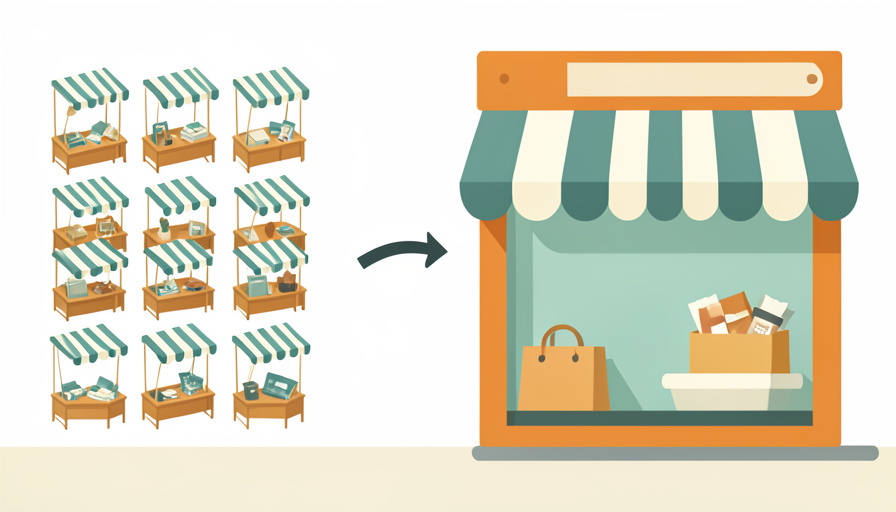
Nine questions that reveal what you actually take on when you leave a marketplace and run the store yourself.
Leaving Etsy for your own storefront is appealing after the latest fee hike or policy change, but it is not simply a cheaper version of the same thing. Etsy quietly handles traffic, sales tax, and disputes for you, and the day you go independent, all of that becomes your job. The math can absolutely work, especially at higher volume, but only if you know what you are signing up for. Run through these switch from Etsy to Shopify questions before you move, so you migrate with a plan instead of a nasty surprise in month two.
What To Know
The three things that catch sellers off guard are traffic, sales tax, and customer data. Etsy sends you shoppers; your own store does not, so you become the marketer. Etsy collects and remits sales tax as a marketplace facilitator in most states; on your own store you are the seller of record and must handle that yourself. And you cannot take your customers’ emails with you, only those who joined your list voluntarily. Confirm you can handle those three before you weigh the fee savings.


Table of Contents
1. Where will my traffic come from?
This is the question that decides everything. On Etsy, shoppers arrive through its search and browsing; on your own store, no one shows up unless you bring them. That means you become responsible for SEO, social, email, and often paid ads, which is a real, ongoing cost of time and money. Before switching, be honest about whether you have an audience, a following, or a marketing plan that can replace Etsy’s built-in foot traffic.
2. Can I actually take my customers with me?
Not as fully as you would hope. You can export your product listings and even customer names and order history by CSV, but Etsy restricts buyer email addresses under its privacy policy, and its rules only let you market to customers who joined your newsletter voluntarily. Reviews do not transfer either. Start collecting emails through an opt-in now, well before you move, or you will rebuild your customer list from close to zero.
3. Who collects and remits sales tax now?
This is the biggest hidden responsibility. As a marketplace facilitator, Etsy automatically collects and remits sales tax for you across most US states. Your own Shopify store is not a marketplace facilitator, which means you are the seller of record and must register, collect, and file sales tax yourself wherever you have nexus. That is a real compliance burden, so factor in the time or the cost of a tax tool or accountant before you switch.
4. What will it truly cost compared to Etsy?
Do the honest math, not the headline. Etsy charges around a 6.5% transaction fee plus listing and offsite ad costs, while Shopify starts near $39 a month plus about 2.9% and 30 cents per transaction, before apps. As a rough guide, Etsy is cheaper below roughly $600 a month in sales, and Shopify pulls ahead above that, especially once Etsy’s mandatory offsite ads kick in at higher revenue. Model your actual volume rather than assuming owning your store is automatically cheaper.
5. How will I handle chargebacks and fraud?
On Etsy, the marketplace mediates disputes and often stands between you and the buyer. On your own store, you own chargebacks directly, including the fees and the evidence-gathering to fight them. Shopify offers a free protection program, but it reimburses only chargebacks flagged as fraud, not every dispute. Understand how you will handle a “not as described” claim or a friendly-fraud chargeback before it is your problem alone.
6. Will I lose my search rankings?
Expect to rebuild, because you cannot carry Etsy’s SEO over cleanly. Etsy locks your listing and shop URLs, so you cannot set up a 301 redirect from your Etsy pages to your new domain the way you would in a normal site migration. That leaves you rebuilding authority through your brand, off-Etsy backlinks, and channels like Pinterest. Plan for a ranking dip and a rebuilding period rather than a smooth handoff of traffic.


7. Can I handle fulfillment, returns, and support alone?
Etsy gives you a structure for orders, messages, and returns; your own store leaves you to build it. You will set your own shipping profiles, returns policy, and customer support flow, and there is no marketplace to escalate to when something goes wrong. If you already run smooth fulfillment on Etsy, this is manageable, but budget time to recreate the operational scaffolding Etsy provided by default.
8. Should I run both in parallel for a while?
For most sellers, yes. Keeping your Etsy shop open while you build and grow your own store spreads the risk, so a slow start on the new site does not tank your income. Many successful sellers treat it as diversifying rather than switching, using Etsy for discovery and their own store for repeat and higher-margin sales. A hard cutover is riskier than a gradual transition, especially in your first season off-platform.
9. Is my business set up for the legal and operational load?
Running your own storefront makes you responsible for the back office Etsy abstracted away. That includes proper business registration, a privacy policy and terms of service on your site, secure payment handling, and clear records for taxes. None of it is exotic, but it is real work you did not have to think about as a marketplace seller. Get the basics in place before launch rather than scrambling after your first sale.
How We Chose These
We focused on the responsibilities that shift onto you when you leave a marketplace, rather than a feature-by-feature Etsy versus Shopify comparison. The order runs from the biggest surprises, traffic, customer data, and sales tax, to the operational and legal load that follows. Each question is meant to test migration readiness, so you find the gaps before they cost you sales or land you with a compliance headache.
This article is general information, not tax, legal, or financial advice. Sales tax and business rules vary by location and change often, so consult a qualified professional about registration, tax nexus, and compliance for your specific situation.
The Bottom Line
Owning your storefront can mean better margins and a real brand, but it hands you the jobs Etsy did silently: bringing traffic, remitting sales tax, and owning disputes. Before you switch, confirm you can drive your own audience, that you have a plan for tax compliance, and that you are collecting customer emails now. For most sellers the smart move is to run both for a season and treat it as diversifying, not a leap. Get those pieces in place and the switch pays off. For more, see YouGottaRead’s guide to common small-business finance mistakes and the wider Business section.
Frequently Asked Questions
What should I consider before switching from Etsy to Shopify?
The main considerations are where your traffic will come from without Etsy’s shoppers, whether you can migrate customers (emails are restricted), who handles sales tax now that you are the seller of record, the true cost versus Etsy fees, and how you will manage chargebacks, SEO, and fulfillment. Run both in parallel to reduce risk.
Can I transfer my Etsy customers and reviews to my own store?
Only partly. You can export product listings and customer names and order history by CSV, but Etsy restricts buyer email addresses, so you can only market to customers who joined your newsletter voluntarily. Reviews do not transfer, so start building an email list and collecting testimonials before you move.
Do I have to handle sales tax myself after leaving Etsy?
Yes. Etsy collects and remits sales tax as a marketplace facilitator in most states, but your own Shopify store is not one, so you become the seller of record. You must register, collect, and file sales tax wherever you have nexus, which usually means a tax tool or an accountant.
Is Shopify cheaper than Etsy?
It depends on volume. Etsy is generally cheaper below about $600 a month in sales because it has no monthly fee, while Shopify’s roughly $39 a month plus lower per-transaction costs win at higher volume, especially once Etsy’s mandatory offsite ads apply. Model your actual sales before deciding.
Will I lose my Google rankings if I leave Etsy?
You will likely see a dip. Etsy locks its listing and shop URLs, so you cannot redirect them to your new domain, and you rebuild search authority through your brand, backlinks, and channels like Pinterest. Plan for a rebuilding period rather than expecting your Etsy traffic to follow automatically.


