


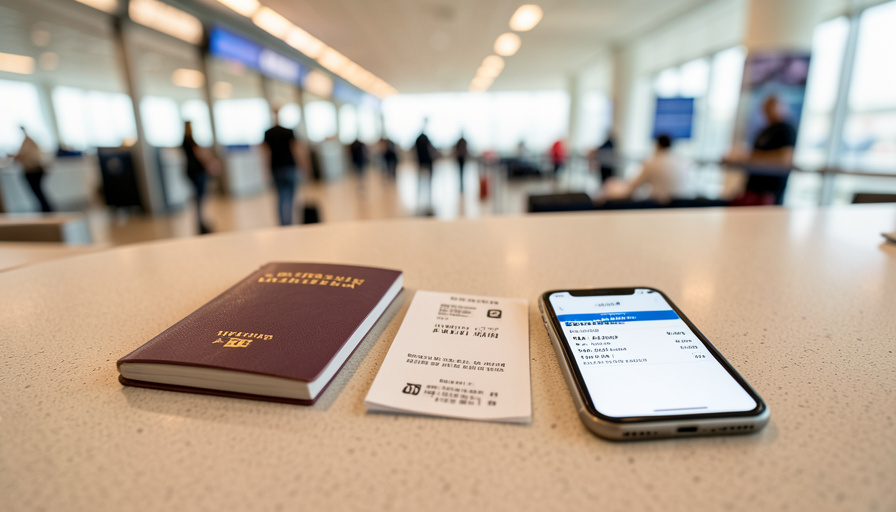
The document that gets travelers turned away at check-in is rarely a visa. It is the flight out nobody booked.
You are standing at the counter with a one-way ticket and a plan to sort the rest out later. The agent asks for proof of onward travel, and suddenly a $300 booking is the only thing between you and your boarding pass. This is the part of international travel that catches confident travelers off guard, because the rule is real but the enforcement is wildly uneven, and the person deciding is a check-in agent following a script, not an immigration officer weighing your story.
What clears that moment is a real ticket the agent can look up. Below are the seven forms of proof airlines accept, ranked by how reliably they hold up, along with the ones immigration might wave through but the gate will not.
The Short Version
Proof of onward travel is evidence that you will leave a country before your visa or visa-free stay runs out. The safest version is a real, ticketed flight out, whether that is a round-trip return or a one-way hop to a neighboring country, because it resolves under your name when the agent searches the record. A fully refundable ticket you cancel after entry does the same job for free, which makes it the best all-round choice. Bus and train tickets often satisfy immigration but not the airline checking you in, so carry an air ticket when you fly.
Table of Contents
Why the airline counter is stricter than immigration
The airline is the party with money on the line, which is why check-in is the real checkpoint. If a carrier flies you somewhere and immigration refuses you entry, that airline has to fly you back at its own cost and can be fined thousands per passenger on top of it. New Zealand, for example, expects every visitor to hold a ticket out or enough money to buy one, a requirement Immigration New Zealand states plainly for visitor entry. Faced with that risk, the agent at the desk would rather deny boarding than gamble on your intentions.
That gap is the whole story. An immigration officer at your destination can look at you, hear your plan, and stamp you in with a bus ticket or nothing at all. The check-in agent an ocean away has none of that context and one instruction: no proof out, no boarding. Travelers heading into Thailand and the Philippines describe the same split over and over, where the border would have been relaxed but the airline would not print the pass without a flight out.
1. A return or round-trip ticket
The cleanest proof is the one you probably already hold when your trip has a fixed end. A round-trip booking shows a confirmed flight home, resolves the instant an agent looks it up, and satisfies both the airline and immigration in one document. If your dates are set, book the return and skip the rest of this list.
The trade-off is flexibility. Locking in a return date works against you if you are the sort who decides the next stop after you land. That is the exact situation the other six options exist to solve.
2. An onward flight to a third country
Your ticket out does not have to go home. A one-way flight from where you are landing to a nearby country counts, and it is usually the cheapest real ticket on the board. Travelers moving around Southeast Asia lean on short routes like Bangkok to Kuala Lumpur or a budget hop to Singapore, often under $60, because they read as a genuine exit.
One rule keeps people out of trouble: the onward date has to fall inside your allowed stay. A traveler who booked a London to Manila onward ticket dated after their visa-free window found this out at the counter, where the agent checked the date against the 30-day limit before releasing the pass. Book the exit for before your welcome expires, not after, and put it in the exact name on your passport, since a name mismatch on the ticket can stall you at the same desk.
3. A fully refundable ticket you cancel after entry
This is the option I would reach for first, and done right it costs nothing. Book a fully refundable fare or use an airline’s free 24-hour cancellation window, fly, clear immigration, then cancel for a full refund. U.S. carriers must refund any ticket cancelled within 24 hours of booking as long as the flight is at least seven days out, a protection the U.S. Department of Transportation requires. Buy the onward ticket the day before you fly, and that refund window is still wide open when you land.
Two things keep it clean. Confirm the fare is genuinely refundable rather than merely changeable, and check that the refund goes back to your card, not into airline credit you will never spend. Long-term travelers on r/digitalnomad landed on this exact method after weaker options burned them, and the logic is simple: it is a real ticket, so it never raises a question.
4. A cheap real ticket you treat as disposable
When chasing a refund is not worth the effort, some travelers buy the cheapest real onward ticket they can find and let it go unused. A $25 budget-airline seat on a short regional route is a small price for a guaranteed boarding pass, and because it is a genuine ticket with a working record, it survives any check the agent runs. The math only holds where flights are cheap, which is why it is common across Southeast Asia and rare on transatlantic routes.
The downside is plain. You are paying for a flight you will not take, and if the fare is anything but trivial, options three and five do the same job for less.
5. A rented onward ticket from a reservation service
Services with names like Onward Ticket, BestOnwardTicket, and OneWayFly will book a real airline reservation in your name and hold it, usually for 24 to 48 hours, for somewhere between $7 and $16. Because it is a live reservation with a verifiable record, it pulls up when an agent looks, and plenty of travelers clear the Philippines and Thailand on one without a second glance.
Here is where it gets risky. Some of the cheaper services hand you a booking that never gets an actual ticket number, and those can fall apart the moment an agent looks past the surface. A few travelers report getting stopped mid-trip on one. The line you must never cross is faking it yourself: a Photoshopped confirmation or a borrowed booking code is document fraud, and it can turn a paperwork hiccup into an entry ban. Rent a real reservation or book a refundable ticket, but do not manufacture a fake.
6. A bus, train, or ferry ticket out of the country
Overland exit tickets are where things get inconsistent. A bus from Thailand to Laos or a train toward Malaysia shows you intend to leave, and immigration officers across much of Southeast Asia accept them without fuss. Travelers report using a Laos bus ticket for a Thai arrival card more than once and walking straight through.
The wall goes up when you fly in. The airline checking you in for the flight to Thailand may only accept an air ticket, even where the border itself would have honored the bus. So if your exit is genuinely overland, you can still get stopped at check-in for the inbound flight. The safe move is to hold a cheap or refundable air onward for the airline and use your bus or ferry ticket for the actual crossing.
7. Proof of funds or a confirmed itinerary, where it counts
A handful of countries let you show you can afford to leave instead of proving you already booked it. New Zealand accepts either a ticket out or evidence you can buy one, alongside a funds expectation of roughly NZD $1,000 a month, or NZD $400 if your accommodation is prepaid. A confirmed hotel booking and a healthy bank balance can carry weight with an officer weighing your overall story at the border.
Do not lean on this at the airline counter. Proof of funds is an immigration-officer tool, and how far it goes depends on the country and the agent. The check-in desk wants to see a flight, so treat funds and itineraries as backup that strengthens your case on arrival, not as your primary proof for boarding.
What airlines reject at the counter
Knowing what fails spares you the worst version of this, the one you discover at the desk with a line behind you. These are the proofs that look fine to you and get turned away on the spot:
- An expired or unpaid hold. A reservation that lapsed, or a rental booking whose 48-hour window has closed, no longer shows up as active.
- A booking with no real record. If the code does not resolve on the airline’s own system, it does not count, which is exactly what sinks the cheapest dummy-ticket sites.
- A screenshot that will not load. A static image an agent cannot verify, or a pass trapped on a phone with no signal, is not proof. Keep the confirmation reachable offline.
- An onward date past your allowed stay. A flight out dated after your visa-free window ends signals an overstay, and a sharp agent will catch it.
- Someone else’s booking. A ticket in the wrong name fails the same name check that stops mismatched boarding passes.
How to choose the right proof for your trip
Match the proof to your trip and your patience for hassle. The table below lines up all seven options by what they cost, whether an airline will accept them at check-in, and who each one suits best.
| Option | Typical cost | Accepted at airline check-in? | Best for |
|---|---|---|---|
| Return or round-trip ticket | Varies | Yes, always | Trips with fixed dates |
| Onward flight to a third country | Often under $60 | Yes | Regional hops in a cheap-flight area |
| Refundable ticket, cancelled after entry | $0 once refunded | Yes | Most travelers with open plans |
| Cheap disposable onward ticket | About $25 and up | Yes | Places where flights are cheap |
| Rented reservation service | $7 to $16 | Usually | A fast fix when a refundable fare is awkward |
| Bus, train, or ferry ticket | Low | Rarely | The border crossing, not the airline |
| Proof of funds or itinerary | $0 | No | Backup at immigration where it is allowed |
If I had to pick one for a traveler with open plans, it is the refundable ticket cancelled after entry, every time. It is a genuine booking that clears the counter, and it costs nothing once the refund lands. Keep a rented reservation in mind as the backup for when fronting a refundable fare is awkward.
Whatever you choose, save it where you can open it without a signal, and book it in the name on your passport. The proof only works if the agent can see it and it matches your document.
This article is general travel information, not legal or immigration advice. Entry rules, visa-free periods, airline policies, and onward-travel enforcement vary by country, carrier, nationality, and date, and they change often. Check your specific airline and the official immigration or embassy guidance for every country on your itinerary before you fly, and confirm with the relevant authority when your entry, stay, or compliance is at stake.
Frequently Asked Questions
What counts as proof of onward travel?
Proof of onward travel is evidence you will leave the country before your permitted stay ends. The strongest form is a real, ticketed flight out with your name on it, either a return home or a one-way flight to another country, because an agent can verify it in the airline’s system. A fully refundable ticket, a cheap onward flight, or a rented reservation from a service all work as long as they are genuine bookings. Some countries also accept proof you can afford to leave, but airlines at check-in almost always want to see an actual flight.
Do airlines actually check for proof of onward travel?
Yes, and the airline is stricter than immigration because it carries the risk. If you are refused entry at your destination, the carrier must fly you back at its own cost and can face a fine, so check-in agents ask for onward proof on routes into countries that enforce it. Whether you get asked varies a lot by nationality, destination, and even the individual agent, but you cannot predict it, so travel prepared. Getting stopped at the desk with no proof means no boarding pass.
Is using an onward ticket rental service legal?
Renting a real, temporary reservation is legal because you are paying for a genuine airline booking held under standard industry rules, not a forged document. The risk sits in two places. Cheaper services sometimes issue a reservation with no real ticket number, which can fail verification, and faking a confirmation yourself, whether by editing a screenshot or borrowing someone’s booking code, is document fraud that can lead to an entry ban. A rented real reservation or a refundable ticket keeps you on the right side of that line.
Can I use a bus or train ticket as proof of onward travel?
Sometimes at immigration, rarely at airline check-in. Immigration officers in much of Southeast Asia accept an overland ticket, such as a bus to Laos or a train to Malaysia, as proof you plan to leave. The airline checking you in for your inbound flight, though, often insists on an air ticket regardless. If your real exit is by land, the safe approach is to carry a cheap or refundable air onward for the airline and keep the bus or ferry ticket for the border crossing itself.
What happens if I do not have proof of onward travel?
At worst, you are denied boarding at check-in and have to buy an onward ticket on the spot, at counter prices, while your flight boards. At the border, you could face extra questioning or, in strict countries, be refused entry. Enforcement is inconsistent, and many travelers are never asked, but the consequence when you are asked is severe enough that it is not worth the gamble. Sort a verifiable onward booking before you get to the airport.
What To Do Next
Before any international trip on a one-way or open-ended ticket, decide your onward proof at home, not in the check-in line. For most travelers with flexible plans, a fully refundable onward flight cancelled after entry is the strongest choice, because it is a real ticket that costs nothing and never invites a question. Keep it reachable offline, make sure the name matches your passport, and confirm the onward date sits inside your allowed stay. Handle that one detail and the counter becomes a formality. For more practical travel prep, browse the YouGottaRead Travel section.


