


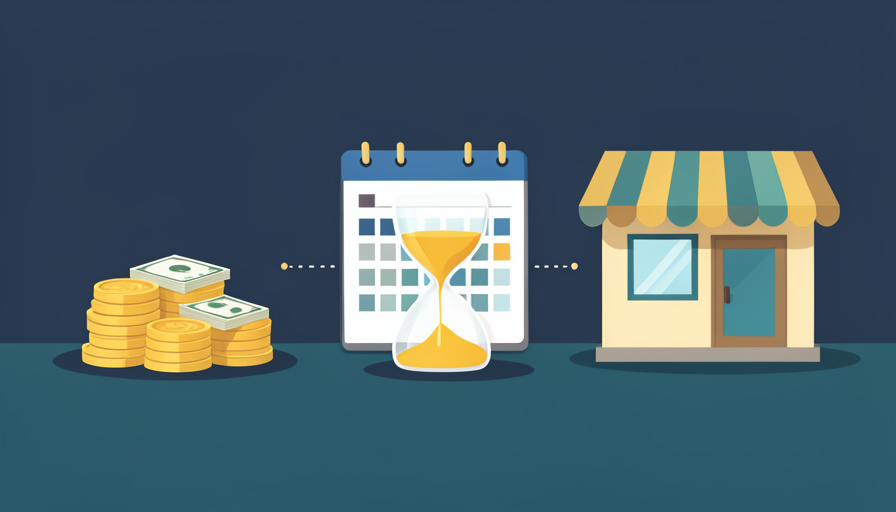
What new sellers can actually expect when a payment processor holds their money, and the signals that make a reserve more likely.
You run your first strong week of sales, log into your dashboard, and the balance looks great. Then the payout button is greyed out, or a line item says a slice of every sale is sitting in “reserve.” The money is yours on paper. You just cannot move it to your bank yet.
This catches new sellers far more often than the signup pages admit, and it got more common in 2026 after the card networks tightened their dispute rules. Reliable payment reserve delay statistics are scarce because no processor publishes how often it holds a new account. What is public is the machinery behind the hold, and that is enough to plan around.
The Short Version
Stripe, PayPal, and Square can all keep a percentage of your sales back for 90 to 180 days, and PayPal can sit on an individual payment for up to 21 days. A reserve is not the same as a frozen account, and it is rarely a punishment. The processor is protecting itself against chargebacks it might have to cover months after you have already spent the money. The accounts that get hit are usually new, growing fast, selling high-ticket or pre-order items, or working in a category with a lot of disputes.
Table of Contents
What a reserve actually is, and how it differs from a hold
A hold and a reserve get talked about as the same thing, but they behave differently, and knowing which one you are looking at tells you how long the wait will be.
A hold delays one specific payment. PayPal is the clearest example: it can park a payment for up to 21 days while it waits for you to ship the order or confirm delivery, then it releases. A reserve is broader. The processor keeps a set percentage of everything you sell, rolling it out on a schedule instead of paying it all on your normal cycle.
The reason for both is the same, and it is worth understanding because it explains almost every decision a processor makes about your account. When a customer disputes a charge, the processor is on the hook for the refund even if you have already been paid and spent the cash. A cardholder can file a chargeback long after the sale, often up to 120 days and sometimes further. So the processor keeps a cushion in case those disputes land after your business has gone quiet. Stripe describes this directly in its own reserves documentation: the reserve is money set aside to cover future refunds and disputes.
That is the mental shift that helps most. The processor is not judging whether you fulfilled this order. It is pricing the risk of what happens six months out.
The numbers that exist, and the one nobody publishes
Here is the honest state of the data. The published policies give you concrete ranges for how long money can be held and how big a reserve can get. What no processor releases is the rate: the share of new sellers who get a reserve in their first month. Treat any specific percentage you see quoted for that as a guess, because the companies do not report it.
What you can rely on are the terms in the processors’ own documents.
| Processor | Typical new-account behavior | Reserve size | How long funds sit |
|---|---|---|---|
| Stripe | 7 to 14 day wait on the first transactions while it verifies the business | Rolling reserve, commonly 10% to 25% of volume | 90 to 180 days, capped at 180 |
| PayPal | Risk-based hold of up to 21 days per payment, released sooner with tracking | Rolling and/or minimum reserve, e.g. around 10% | Rolling releases, often on a 90-day cycle |
| Square | Percentage of daily card volume held back on higher-risk accounts | Often 20% to 30% of card volume | 90 to 180 days, depending on the account |
PayPal spells out the two reserve types in its account reserves guide: a rolling reserve that holds a percentage of each day’s takings and releases it later, and a minimum reserve that keeps a fixed balance parked in your account. Its separate 21-day payment hold, covered in PayPal’s funds availability policy, is the one new sellers hit first, and adding tracking to an order is the fastest way to clear it early.
Square has its own reserves FAQ and flags the same triggers: deposits, retainers, pre-paid contracts, and trades like HVAC, plumbing, and locksmithing, where the work happens long after the card is charged. The pattern across all three is consistent. The longer the gap between payment and delivery, the more of your money the processor wants to hold.


Why holds got more likely in 2026
If reserves feel more aggressive lately, that is not your imagination. The card networks changed the math this year.
Visa consolidated its old fraud and dispute programs into a single scorecard, the Visa Acquirer Monitoring Program. It tracks one number, the VAMP ratio, which is fraud reports plus disputes divided by settled transactions. As the Merchant Risk Council reported, the merchant threshold dropped to 1.5% on April 1, 2026, down from 2.2%. Cross a line like that and you face per-dispute fees and possible enrollment in the monitoring program. Merchants under 1,500 disputed transactions a month are excluded, which protects the smallest sellers from the headline penalties but not from the knock-on effect.
That knock-on effect is the part sellers feel. Your acquirer, the bank behind your processor, has its own ratio to protect across every merchant it serves. A single new account with a rising dispute rate can drag that number, so acquirers get quicker to slap a reserve on anything that looks risky before it becomes their problem. Tighter network rules at the top turn into more cautious reserves at the bottom.
The risk signals that trigger a reserve
Processors do not decide by hand for most accounts. Automated risk models score you, and a few signals carry most of the weight. If several of these describe your business, plan for a reserve rather than hoping you dodge it.
- No history. A brand-new account has nothing to prove it can handle refunds, so the model assumes the worst until you build a track record.
- A sudden volume spike. Going from almost nothing to five or six figures in a week reads as risk, not success. A sharp jump from a standing start triggers a review and a hold even when every sale is real, so growth itself can freeze your cash.
- Large or one-off tickets. A few big charges are harder to cover than many small ones, so high average order values pull the reserve up.
- A long delivery gap. Pre-orders, event tickets, deposits, and future-dated services all leave a wide window for disputes, which is exactly what a reserve is built for.
- A high-dispute category. Travel, ticketing, electronics, supplements, coaching and courses, subscriptions, and home-service trades all carry elevated chargeback rates and draw reserves faster.
- A climbing dispute or refund rate. Even a modest rise toward the card-network thresholds is enough for the model to react.
- A mismatch. When your stated business type does not match what you are actually charging for, the account gets flagged for a closer look.
One card-shop owner described the experience on Reddit better than any policy page:
They held 30% for 90 days and it almost tanked me. Stripe does not care whether you already shipped. They see risk and clamp down.
— a seller on r/stripe
That frustration is real, and it points at the fix. You cannot argue a reserve away by insisting your sales are legitimate. You lower it by changing the signals the model reads.
What actually gets your money released
Repeated “please release my funds” tickets do almost nothing, because a support agent cannot override a risk decision on a plea. Evidence can. Here is the order that works, based on what sellers report actually helps.
- Send documents, not complaints. Pull the last 90 days of payouts, refunds, and disputes, plus supplier invoices and proof of delivery, and reply to the reserve notice with those attached. That is the packet a human reviewer can act on.
- Add tracking to every order. On PayPal especially, uploading tracking is what clears the 21-day hold early, and delivery confirmation is the single strongest signal that an order is genuine.
- Drive your dispute rate down. Respond to every chargeback, use a clear billing descriptor so customers recognize the charge, and make refunds easy so buyers come to you instead of their bank.
- Warn the processor before a launch. If you expect a big spike, tell your provider in advance with context. A jump they saw coming is far less likely to freeze than one that surprises the model.
- Match the processor to your model. If your business is genuinely high-risk, a specialist high-risk processor may cost more per transaction but hold less of your cash. That trade can be worth it for cash flow.
For most legitimate new sellers, the fastest fix is documentation and tracking rather than a new processor. Switching resets your history to zero somewhere else and can restart the very hold you were trying to escape. Move only when your category is the problem, not your paperwork.
This article is for general information only and is not financial or legal advice. Processor policies and card-network rules change, so check your provider’s current terms and consider a qualified professional for your own situation.
Frequently Asked Questions
How long can a payment processor hold my funds?
Under published policies, a rolling reserve can hold a percentage of your sales for up to 180 days, and PayPal can hold an individual payment for up to 21 days. Those are the standard ceilings. Unresolved disputes or an account review can extend things, so read your provider’s reserve notice for the exact schedule on your account.
Is a reserve the same as my account being frozen?
No. A reserve holds back part of your money on a schedule while the rest pays out normally. A freeze stops everything. If your payouts still arrive but a slice is held, that is a reserve, and the held portion is scheduled to release later.
Will I get the reserved money back?
Yes, in almost every case. Reserved funds are yours and release on the schedule in your notice, minus anything used to cover refunds or chargebacks. The money is delayed, not taken.
Can I avoid a reserve completely?
There is no guaranteed way, since the processor decides based on its own risk model. You improve your odds by building steady processing history, adding tracking, keeping disputes low, and avoiding sudden unexplained spikes. A genuinely high-risk category may draw a reserve no matter how clean your operation is.
Does a reserve mean I did something wrong?
Not usually. Reserves are standard risk management, and plenty of healthy businesses carry one, especially new accounts and fast-growing stores. It reflects the processor’s exposure to future disputes, not a verdict on you.
What To Do Next
Open your dashboard and find whether you have a hold or a reserve, then read the exact release schedule instead of guessing at it. Add tracking to open orders today, since that is the quickest win. If the reserve is squeezing your cash flow, build the documentation packet and reply to the notice with it rather than filing another release request. For more on keeping a growing business’s cash healthy, YouGottaRead’s guide to common small-business finance mistakes is a useful companion, and the wider Business section covers related payment and operations topics.


