


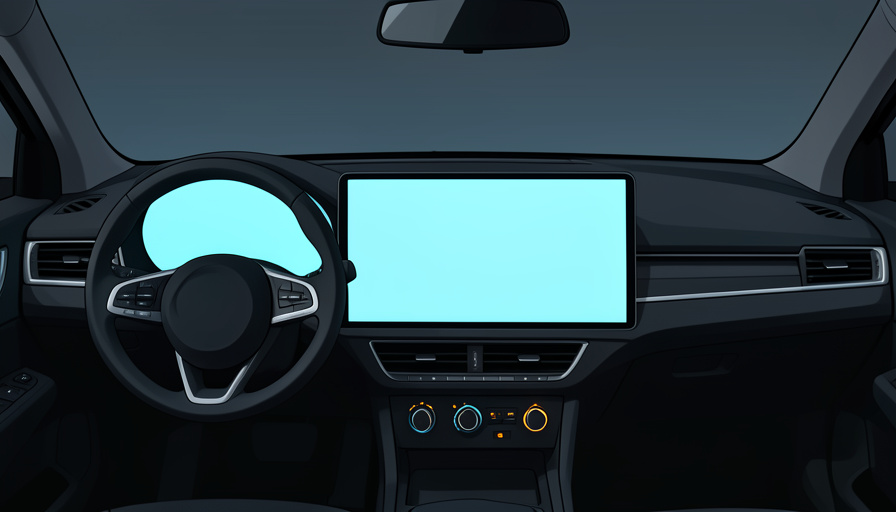
The joke is simple: a photo of a modern car interior, dominated by one enormous glowing screen, captioned as if it belongs in a video game. People keep sharing it because it feels true. Somewhere along the way, the dashboard started looking less like a car and more like a menu.
The new GTA dashboard meme about in-car screens is funny because it lands on something real. As automakers have moved nearly every control onto giant touchscreens, drivers have grown uneasy about hunting through menus at 70 miles per hour. The meme is the light version of a serious argument that safety regulators, carmakers, and drivers are now having in earnest. Here is what is actually going on beneath the punchline.
The debate comes down to a simple question: what should you be able to do without looking?
At a Glance
Modern cars have shifted most controls to large touchscreens, and a viral meme comparing them to a video-game interface has renewed a real safety debate. Research links touchscreen operation to dangerous levels of driver distraction, and from 2026 Euro NCAP requires physical controls for key functions to earn a top safety rating. Automakers are already bringing buttons back for things like climate and volume, moving toward layouts that mix screens with tactile controls.
Why the Meme Struck a Chord
Screens took over car interiors fast. What used to be a knob for temperature, a button for hazards, and a dial for volume became rows of icons buried in a touchscreen, sometimes several menus deep. It looks sleek in a showroom, and it photographs like a gadget, which is exactly why the video-game comparison writes itself.
The frustration under the joke is practical. A physical knob can be found and turned by feel, eyes still on the road. A touchscreen demands a look, a tap, and often a second tap when you miss. Drivers noticed, and the meme gave that irritation a shape.
The Real Safety Concern
This is where the humor gives way to hard data. Studies of touchscreen use behind the wheel have produced alarming results, with one widely cited UK test finding that drivers interacting with infotainment screens reacted more slowly than drivers over the legal alcohol limit. The problem is simple: a task that pulls your eyes and attention off the road for several seconds at highway speed covers a lot of blind distance.
Not every screen interaction is equally risky, but the safety-critical ones, the controls you may need instantly, are the worst candidates for a menu. That distinction is exactly what regulators have zeroed in on.
Euro NCAP Changes the Rules
The most consequential response comes from Euro NCAP, the influential European safety body. From 2026, its testing makes it much harder for a touchscreen-only car to earn a five-star rating, effectively requiring physical controls for a set of core functions.
The targeted functions are the ones you should never have to dig for: turn signals, hazard lights, the horn, windshield wipers, and the emergency call system. As safety groups like the European Transport Safety Council have noted, the goal is to keep the most urgent controls operable by touch alone. With most European buyers paying attention to safety scores, the rule carries real commercial weight.
Automakers Are Already Reversing Course
The shift back was underway even before the deadline. Several manufacturers have responded to customer complaints and the new testing standards by reintroducing tactile controls, a trend covered by outlets like Autoblog.
Volkswagen has brought back physical buttons for climate and volume in newer models after backlash, Mazda has largely kept a conventional control layout, and brands including Hyundai and Nissan have leaned into hybrid designs that pair a screen with real switches. The industry direction is clear, and it is a rebalancing rather than a retreat: keep the screen, but return the essentials to physical controls.
The Case Screens Still Have
It would be a mistake to treat every screen as the enemy. Large displays genuinely help with maps, they allow features to be updated over the air, they can simplify a cluttered dashboard, and they lower manufacturing cost. For navigation, media browsing, and settings you adjust while parked, a touchscreen is a reasonable home.
The sensible middle ground is about matching the control to the task. Keep the things you need instantly, and often blind, as physical buttons, and let the screen handle the rest. That is the layout most of the industry now seems to be converging on.
What It Means for Car Buyers
If you are shopping, the meme is a useful reminder to test the interior the way you will actually use it. A few checks help.
- Try the basics blind. See if you can adjust temperature, volume, and hazards without staring at a screen.
- Check the safety-critical controls. Wipers, indicators, and the horn should be instant and physical.
- Watch for menu depth. If common actions take several taps, that is friction you will feel every drive.
- Favor hybrid layouts. A big screen paired with real buttons tends to age better than an all-glass dashboard.
Frequently Asked Questions
Are big touchscreens in cars actually dangerous?
They can raise distraction risk. Studies have found that operating a touchscreen while driving slows reaction times significantly, in some tests more than being over the alcohol limit, because it pulls your eyes and attention off the road for several seconds.
What is Euro NCAP’s 2026 button rule?
From 2026, Euro NCAP makes it harder for touchscreen-only cars to earn five stars by requiring physical controls for core functions such as turn signals, hazard lights, the horn, wipers, and the emergency call system.
Are car buttons actually coming back?
Yes, in a hybrid form. Several automakers, including Volkswagen, have reintroduced physical buttons for functions like climate and volume, and the trend is toward pairing large screens with tactile controls rather than removing screens entirely.
Why did carmakers switch to touchscreens in the first place?
Screens offer flexibility, over-the-air updates, a cleaner look, and lower production cost than many separate buttons. They work well for maps, media, and settings, but they become a problem when safety-critical controls are buried in menus.
What should I look for when buying a car?
Test whether you can operate essentials like climate, volume, wipers, and hazards by feel without looking. Favor layouts that keep urgent controls physical and reserve the touchscreen for tasks like navigation and media.
The Bottom Line
The dashboard meme is funny because it names a real regression: cars that make you look at a screen to do things you used to do by feel. The good news is that the correction is already happening, pushed by distraction research, Euro NCAP’s 2026 rules, and drivers voting with their complaints. Screens are here to stay, and the buttons that matter are coming back alongside them. For more on cars and the tech inside them, browse YouGottaRead’s Autos section, including our look at how trade shifts hit auto parts and prices.


