



A front desk starts texting appointment reminders from a cheap virtual number, everyone loves it, and then someone asks the uncomfortable question: is this even allowed? For a medical practice, the answer often turns out to be no, and by then the texts, the patient details, and the habit are already baked into the daily routine.
Clinics reach for Google Voice alternatives with A2P texting support once they realize the free option cannot sign a business associate agreement and keeps tripping over carrier registration. Google Voice is fine for a solo side hustle. It is a poor fit the moment protected health information enters a message thread, because it does not offer the paperwork, controls, or deliverability that patient texting demands. Here are six platforms built for that job, what each does well, and how to choose without guessing.
The Quick Rundown
Google Voice will not sign a BAA and does not smooth over A2P 10DLC registration, so it is not suitable for texting patients. Purpose-built platforms like Spruce Health, OhMD, Klara, Weave, iPlum, and TigerConnect offer a signed BAA, audit logging, and managed carrier registration. The right pick depends on your size, your EHR, and how much of the compliance setup you want the vendor to handle for you.
Why Google Voice Falls Short for Clinic Texting
Two gaps make Google Voice risky for patient communication. The first is legal: HIPAA requires a business associate agreement with any service that handles protected health information, and Google Voice is not on Google’s list of BAA-covered Workspace services the way core apps like Gmail and Drive can be. Without that signed agreement, texting patient details through it is a compliance problem waiting to surface.
The second gap is practical. Business texting in the United States now runs through A2P 10DLC registration, where you register your organization and your messaging use case with the carriers. Skip it or get it wrong and reminders silently fail to deliver. Google Voice gives you little help here, while the platforms below fold registration into onboarding.
What Compliant Clinic Texting Actually Requires
Before comparing names, it helps to know the checklist every option should meet. A platform fit for patient messaging generally provides:
- A signed BAA. The vendor agrees in writing to protect PHI, which is the non-negotiable starting point.
- Encryption and access controls. Data protected in transit and at rest, plus role-based access so staff see only what they should.
- Audit logs and consent tracking. A record of who sent what, and proof that patients opted in and can opt out.
- Managed carrier registration. Help getting through A2P 10DLC so your texts actually arrive.
Hold each option against that list and the choice gets much clearer.
The Six Alternatives at a Glance
| Platform | Best for | BAA offered | Stands out for |
|---|---|---|---|
| Spruce Health | Practices wanting one hub | Yes | Shared team inbox, calls plus texts |
| OhMD | EHR-connected texting | Yes | Records integrations |
| Klara | High-volume messaging | Yes | One thread per patient |
| Weave | Dental and small medical | Yes | Phone plus front-office tools |
| iPlum | Solo and very small practices | Yes | Lean compliant second line |
| TigerConnect | Larger, multi-site groups | Yes | Care-team coordination |
Spruce Health
Spruce is a communication hub built specifically for healthcare, bundling secure messaging, a phone line, faxing, and a shared team inbox. It markets itself as a HIPAA-compliant platform and offers a BAA, which puts it squarely in scope for a clinic that wants one tool instead of five.
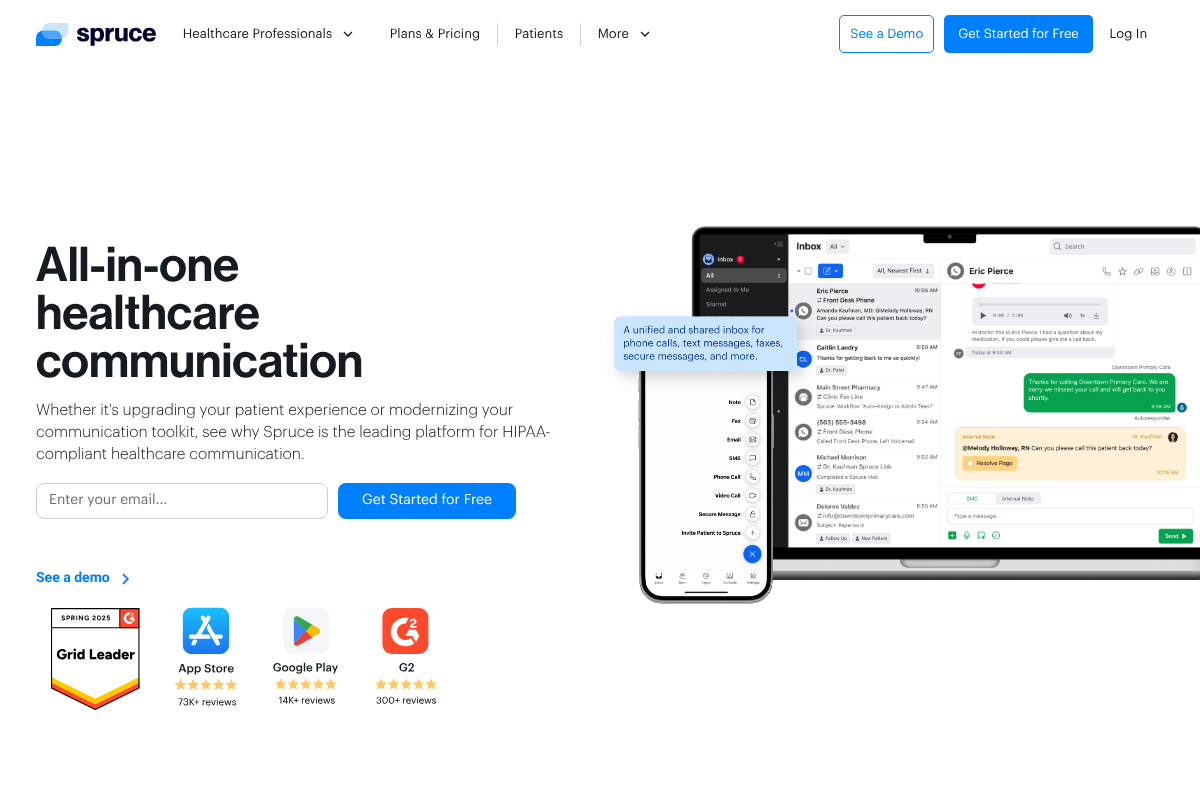

It suits practices that want patient texting to live alongside calls and internal notes. According to Spruce Health, the shared inbox is designed so a whole front-desk team can triage patient messages together, which is closer to a clinic workflow than a plain texting app.
OhMD
OhMD focuses on patient communication and is a common pick for practices that want texting tied into their scheduling and records. It offers a BAA and leans on integrations with electronic health record systems so reminders and replies do not live in a silo.
Choose it when tight EHR integration matters more than an all-in-one phone system. For a clinic already committed to a particular records platform, that connection can save the staff a lot of double entry.
Klara
Klara is a patient messaging and engagement platform aimed at streamlining the back-and-forth between a practice and its patients. It provides a BAA and centralizes conversations coming in from different channels into one thread per patient.
It fits busier offices that field a high volume of patient questions and want to keep everything organized in one place. The pitch is less about replacing your phone and more about taming the messaging chaos around it.
Weave
Weave pairs a phone system with texting and is popular in dental and smaller medical practices. It bundles reminders, two-way texting, reviews, and payments, with a BAA available for healthcare customers who need one.
Consider Weave if you want the phone and the texting to come from the same vendor, with front-office features layered on top. Smaller practices often like that the whole front desk runs on one system rather than a patchwork.
iPlum
iPlum takes a leaner approach: a separate, compliant phone line and texting layer that keeps work communication off your personal number. It offers a BAA and is often mentioned by solo clinicians who want compliant texting without a heavy platform.
It is a strong option for individual providers and very small practices. If the main goal is a clean, compliant second line for patient texts, iPlum covers that without asking you to adopt an entire operations suite.
TigerConnect
TigerConnect sits at the larger end, built for clinical teams that need secure messaging across a whole organization. It provides a BAA and emphasizes care-team coordination, which goes beyond simple appointment reminders.
It makes the most sense for bigger groups, multi-site practices, or anywhere clinical staff message each other about patients rather than only messaging patients themselves. For a single small clinic it can be more than the situation calls for.
How to Choose Among Them
Start with size and scope. A solo therapist or single provider is well served by a lean compliant line like iPlum, while a busy or multi-site group leans toward Spruce, Klara, or TigerConnect. Weave and OhMD sit comfortably in the middle for a typical small practice.
Then weigh two practical factors: whether it integrates with your EHR, and how much of the A2P registration and consent setup the vendor handles for you. Ask every shortlisted vendor to confirm the signed BAA and their registration support in writing before you commit, so the compliance basics are settled up front rather than discovered later.
This article is general information, not legal or compliance advice. HIPAA obligations depend on your specific setup, the data you handle, and a signed business associate agreement, and rules change over time. Confirm each vendor’s current terms and consult a qualified compliance or legal professional before texting any patient information.
Frequently Asked Questions
What are the best Google Voice alternatives for clinic texting?
For compliant patient messaging, look at Spruce Health, OhMD, Klara, Weave, iPlum, and TigerConnect. Each offers a signed BAA and handles A2P 10DLC registration, which Google Voice does not. The best fit depends on your practice size, EHR, and how much setup you want the vendor to manage.
Is Google Voice HIPAA compliant for texting patients?
No. Google Voice is not covered by Google’s business associate agreement the way some Workspace services can be, so texting protected health information through it is not compliant. Clinics that message patients should use a platform that signs a BAA and provides audit logs and access controls.
What is A2P 10DLC and why does it matter for clinics?
A2P 10DLC is the registration system for business texting over standard phone numbers in the US. Clinics must register their organization and use case, or appointment reminders and patient texts can be filtered or blocked. Compliant platforms build this registration into onboarding so messages actually deliver.
Spruce Health vs iPlum: which is better for a small clinic?
iPlum is leaner, giving solo and very small practices a compliant second line for calls and texts. Spruce is a fuller healthcare communication hub with a shared team inbox, faxing, and phone, which suits practices that want everything in one tool. Both offer a BAA.
Do I need a BAA if I only send appointment reminders?
Generally yes, if the messages include any protected health information, which can be as subtle as tying a name to an appointment. The safe approach is to use a vendor that signs a BAA and to confirm your specific use with a compliance professional rather than assuming reminders are exempt.
The Bottom Line
Google Voice earns its popularity for personal use, but patient texting is a different job with legal strings attached. The alternatives here exist because clinics needed a signed BAA, real access controls, and carrier registration that keeps reminders landing in inboxes. Match the platform to your size and your records system, get the BAA and A2P support confirmed in writing, and the compliance worry stops following your front desk around. For more on running the operational side of a practice, browse YouGottaRead’s Business section, including our look at how teams are renegotiating everyday work rules.


